
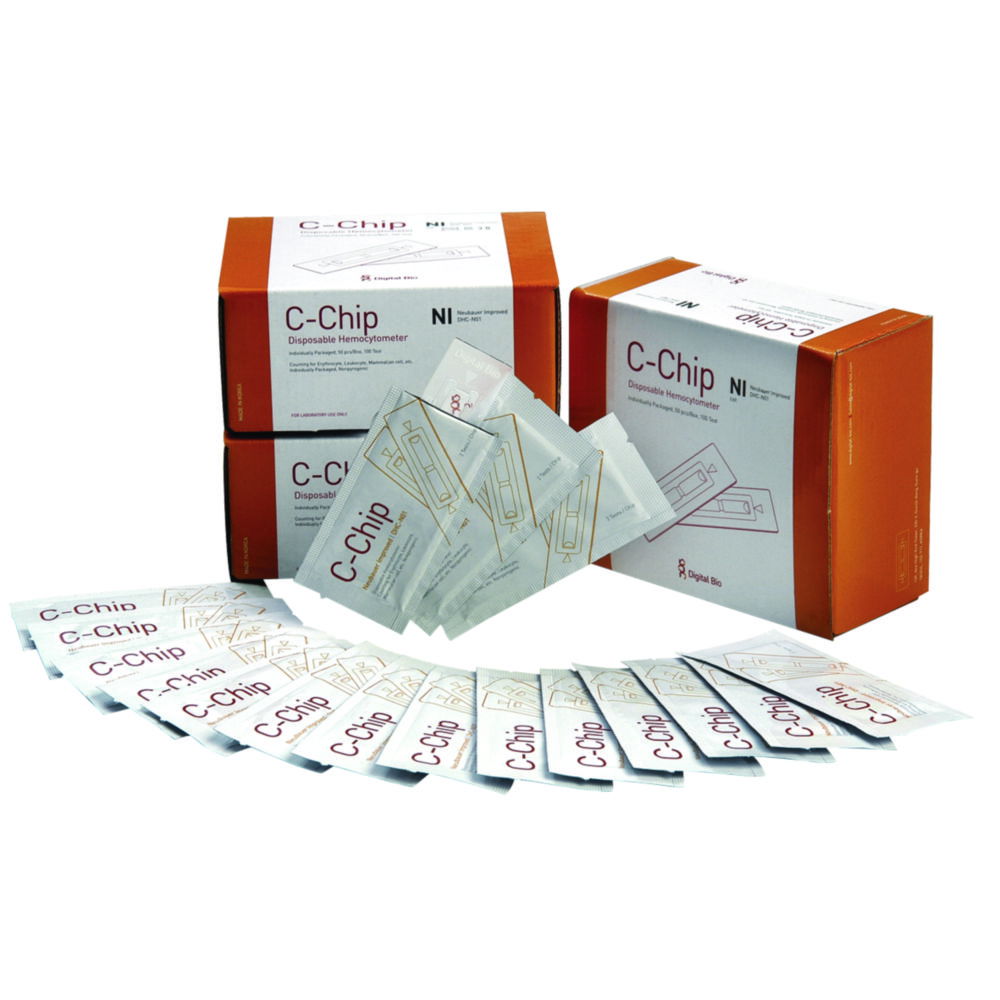
Counting chambers C-Chip, two chambers
Disposable counting chamber made of optical plastic. Dimensions: 25 x 75 mm, thickness 1,6 mm. Various applications such as blood cell counting, cell concentration measurement, sperm counting, investigation of cell viability and bacteria and fungal spore counting.No need for coverslipsReduces the risk of infectious materialsQuartz grade optical plasticGuaranteed repeatability and reliabilityIndividually wrappedTwo chambers per chip.
Counting chambers, Bürker
Double net ruling, includes 2 haemocytometer glass covers, with LOT number on the packaging, labelled with: usable until, CE pursuant to IVD 98/79 EC. The ruling shows 9 large squares of 1 mm² each. These are used for counting leucocytes. Each large square is subdivided by double lines into 16 group squares with 0.2 mm sides. The group squares correspond in size to the Neubauer counting chamber, but have no further subdivisions. They are used for counting thrombocytes and erythrocytes. The double lines form mini squares with an area of 0.0025 mm2.
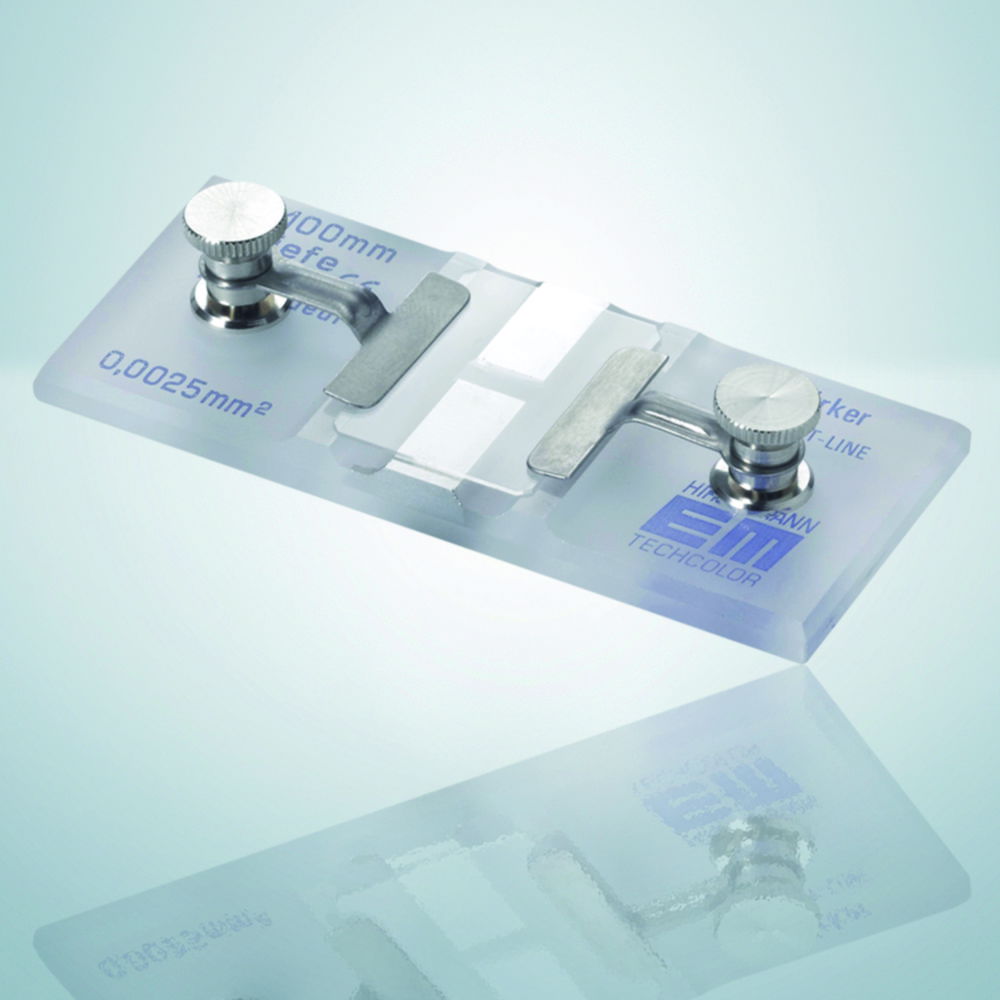
Counting chambers, Fuchs-Rosenthal ruling, bright line
Bright lined, double net ruling, includes 2 haemocytometer glass covers, with LOT number on the packaging, labelled with: usable until, CE pursuant to IVD 98/79 EC. Grid has 16 x large 1 mm² squares. Each square is divided into 16 smaller squares each with a side length of 0.25 mm and an area of 0.0625 mm². These counting chambers are commonly used to count cells in cerebrospinal fluid.
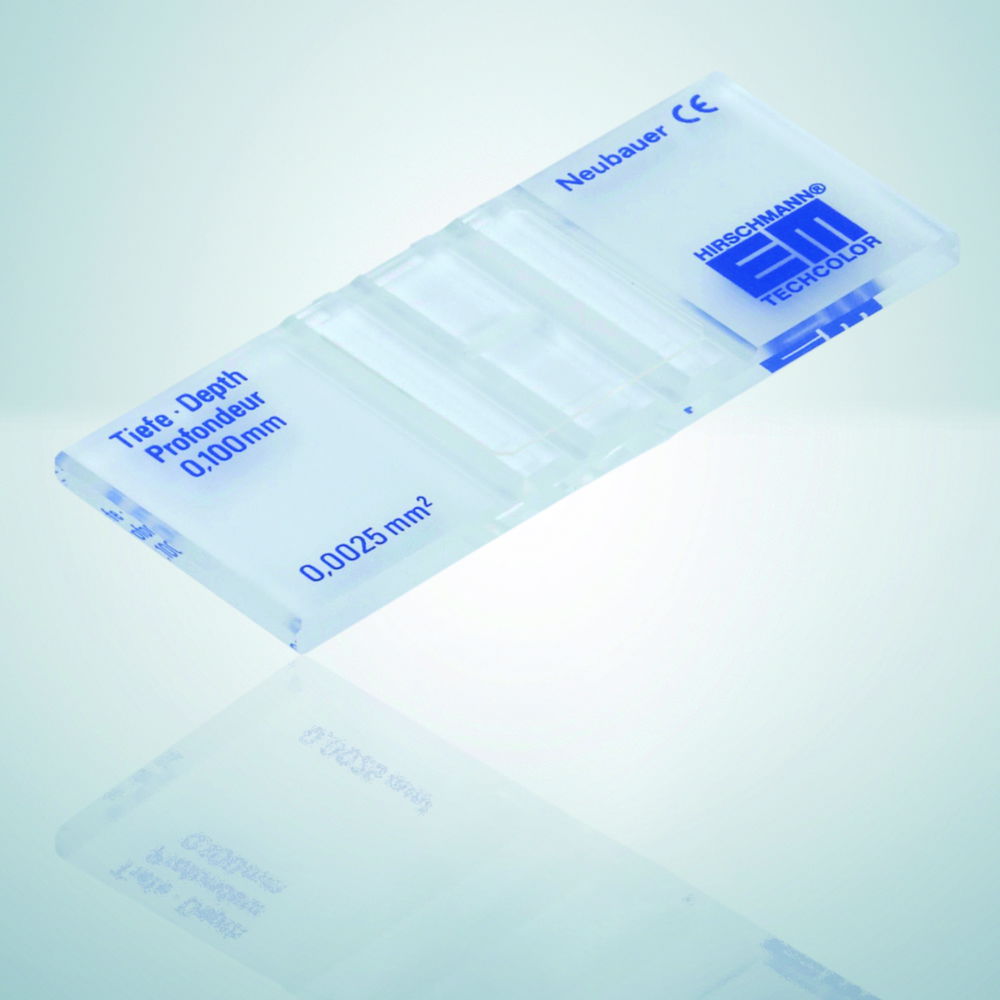
Counting chambers, Improved Neubauer
Double net ruling, includes 2 haemocytometer glass covers, with LOT number on the packaging, labelled with: usable until, CE pursuant to IVD 98/79 EC.
Counting chambers, Improved Neubauer, bright line
Bright lined, double net ruling, includes 2 haemocytometer glass covers, with LOT number on the packaging, labelled with: usable until, CE pursuant to IVD 98/79 EC. By altering the contrast it is possible to reverse the image under the microscope to make the rulings appear brighter or darker as required.
Counting chambers, Nageotte ruling
Double net ruling, includes 2 haemocytometer glass covers, with LOT number on the packaging, labelled with: usable until, CE pursuant to IVD 98/79 EC. For cell counting with very low cell values, e.g. liquor cerebrospinalis, counting residual leucocytes in erythrocyte and thrombocyte PLT concentrates or in plasma. Also suitable for counting of nematodes. The bands are counted by meandering succession.
Counting chambers, Nageotte ruling, bright line
Bright lined, double net ruling, includes 2 haemocytometer glass covers, with LOT number on the packaging, labelled with: usable until, CE pursuant to IVD 98/79 EC. For cell counting with very low cell values, e.g. liquor cerebrospinalis, counting residual leucocytes in erythrocyte and thrombocyte PLT concentrates or in plasma. Also suitable for counting of nematodes. The bands are countd by meandering succession.
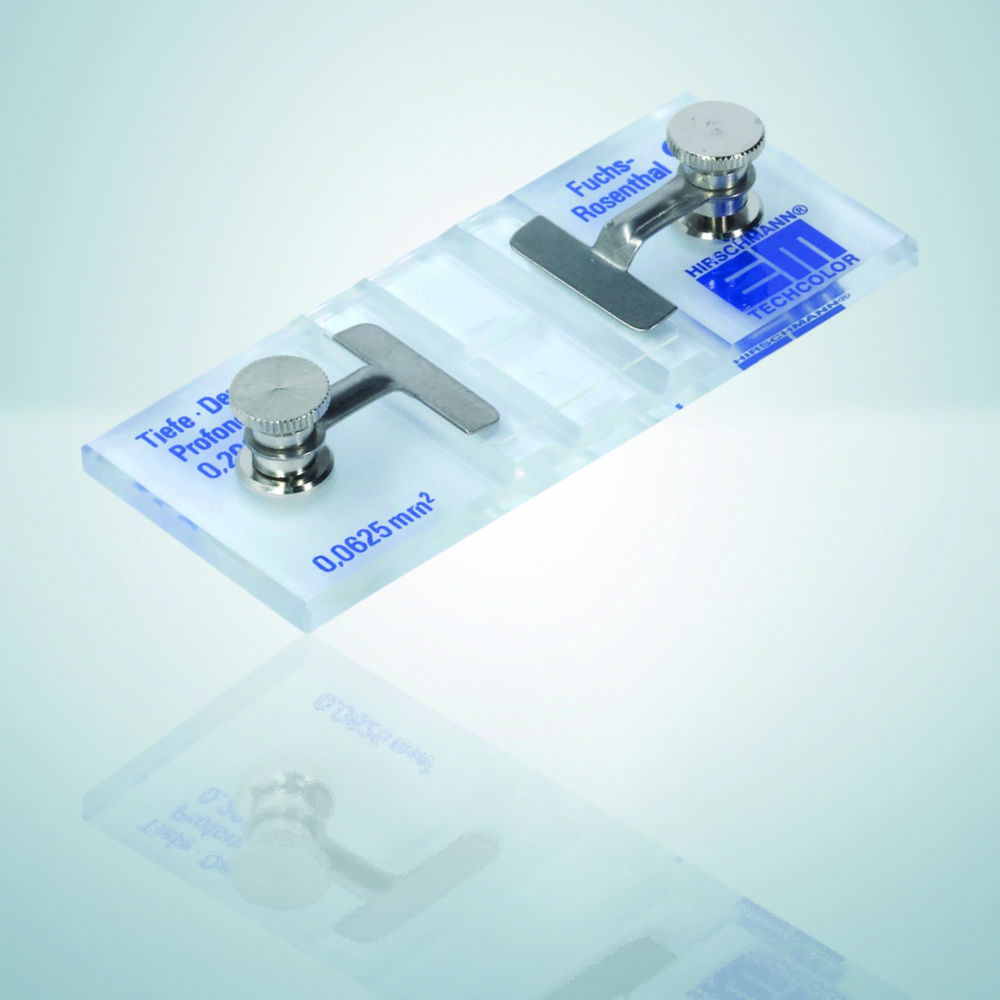
Counting chambers, Neubauer
Double net ruling, includes 2 haemocytometer glass covers, with LOT number on the packaging, labelled with: usable until, CE pursuant to IVD 98/79 EC.
Counting chambers, new Thoma ruling
Double net ruling, includes 2 haemocytometer glass covers, with LOT number on the packaging, labelled with: usable until, CE pursuant to IVD 98/79 EC.
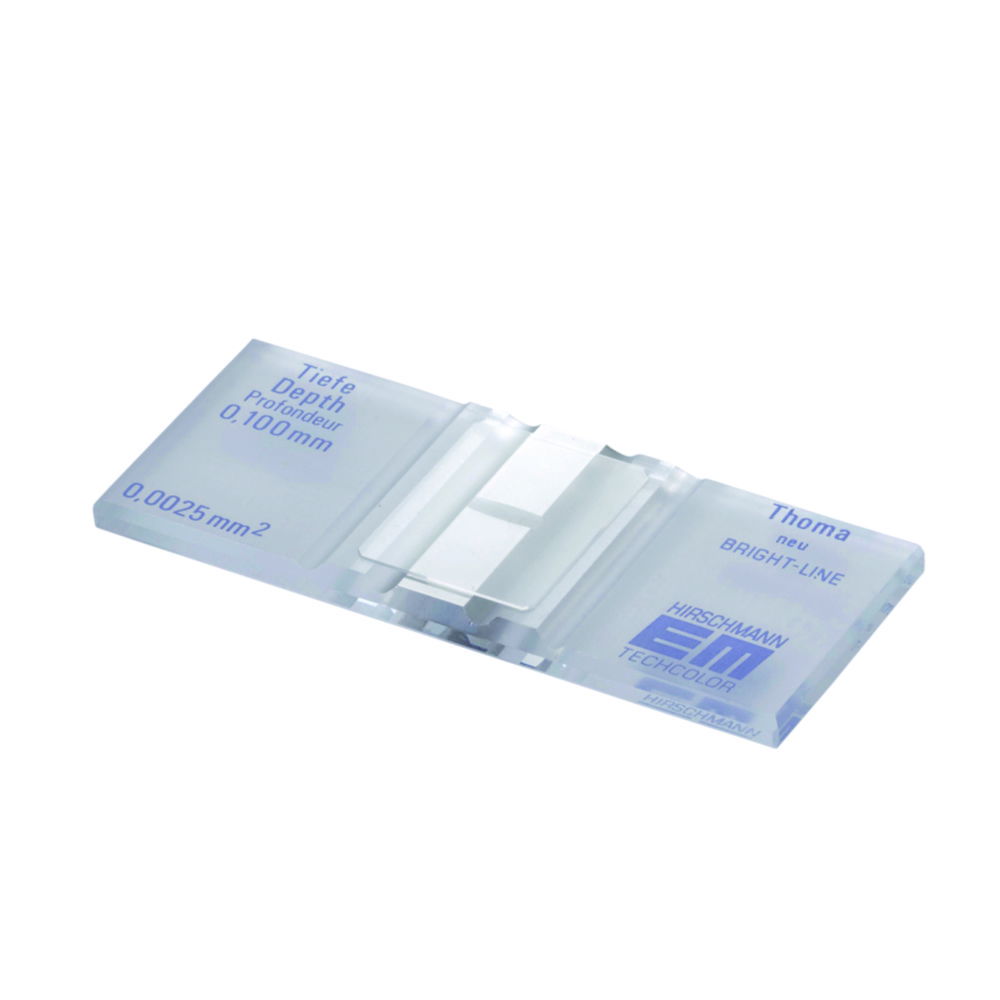
Counting chambers, new Thoma ruling, bright line
Bright lined, double net ruling, includes 2 haemocytometer glass covers, with LOT number on the packaging, labelled with: usable until, CE pursuant to IVD 98/79 EC.
Counting chambers, Thoma ruling
Double net ruling, includes 2 haemocytometer glass covers, with LOT number on the packaging, labelled with: usable until, CE pursuant to IVD 98/79 EC. Grid is the same as the grid in the centre of large square in the Neubauer chamber. The area of the small square is 0.0025 mm². Since the large outer squares are not included, the Thoma system is only used to count thrombocytes and erythrocytes.
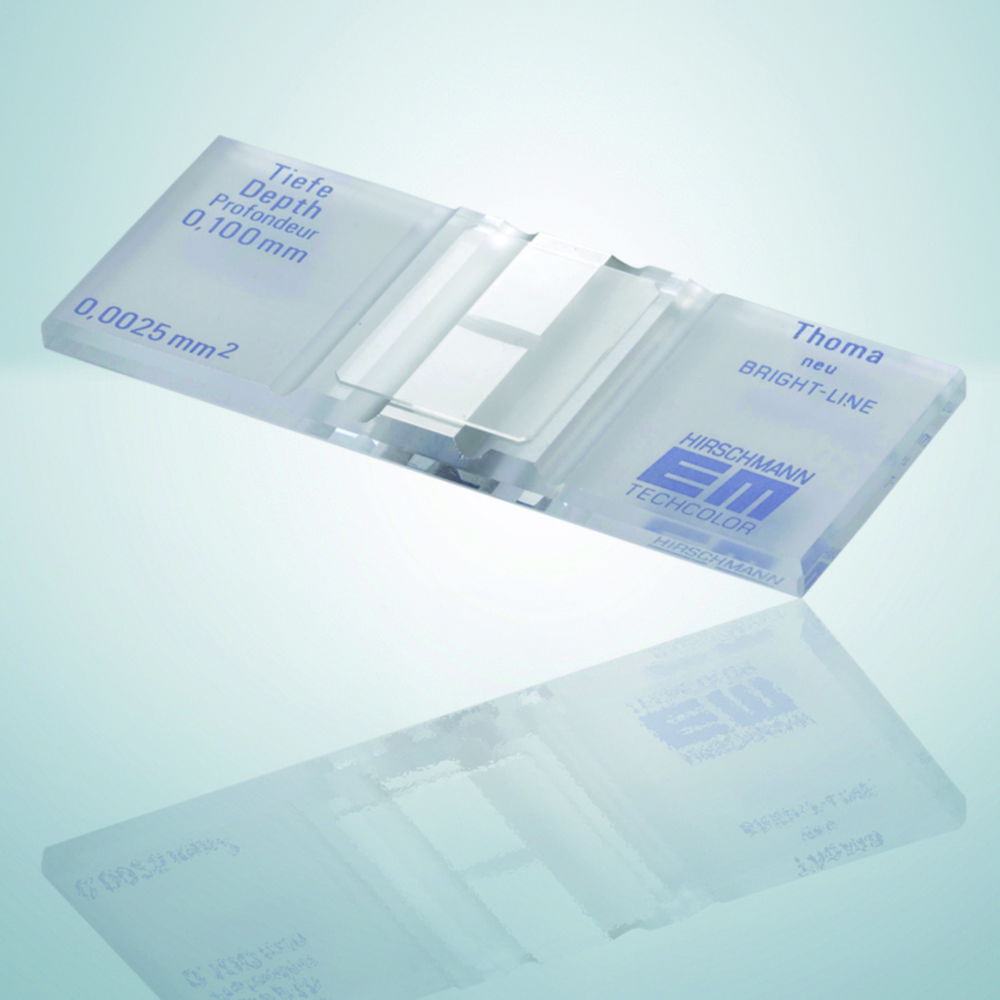
Counting chambers, Thoma ruling, bright line
Bright lined, double net ruling, includes 2 haemocytometer glass covers, with LOT number on the packaging, labelled with: usable until, CE pursuant to IVD 98/79 EC. Grid is the same as the grid in the centre of large square in the Neubauer chamber. The area of the small square is 0.0025 mm². Since the large outer squares are not included, the Thoma system is only used to count thrombocytes and erythrocytes.
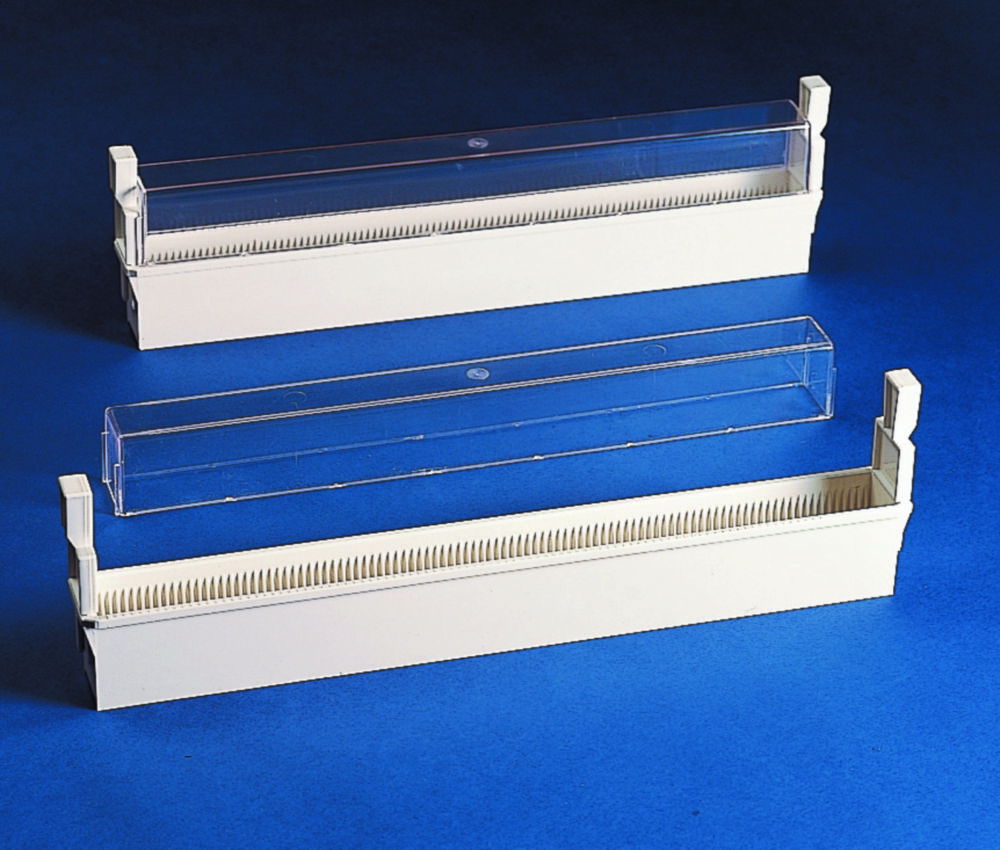
Cover for slide holder
Cover made of PS protects the slides against dust and other foreign bodies. Dimensions 345 x 35 x 40 mm.
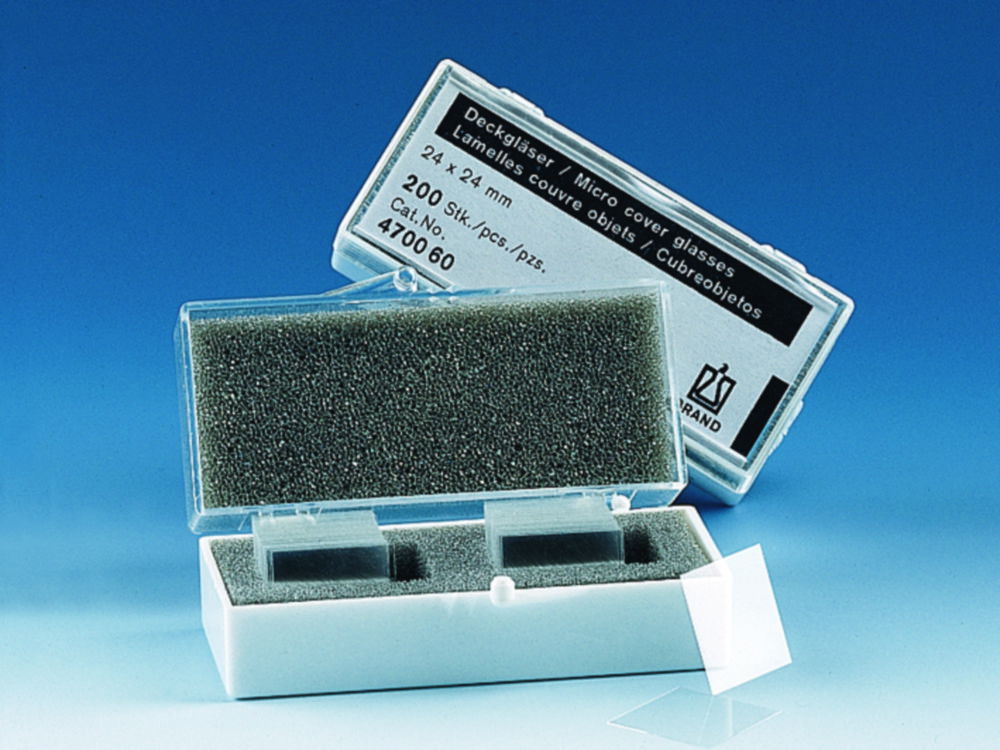
Cover Glasses
Pure white, clear borosilicate glass, hydrolytic class 1 with excellent chemical resistance. Thickness No. 1, 0.13 to 0.17 mm.
Cover glasses for counting chambers according to McMaster
Dimensions 80 x 18 mm.
Cover glasses for counting chambers according to Sedgewick Rafter
Dimensions 60 x 30 mm.
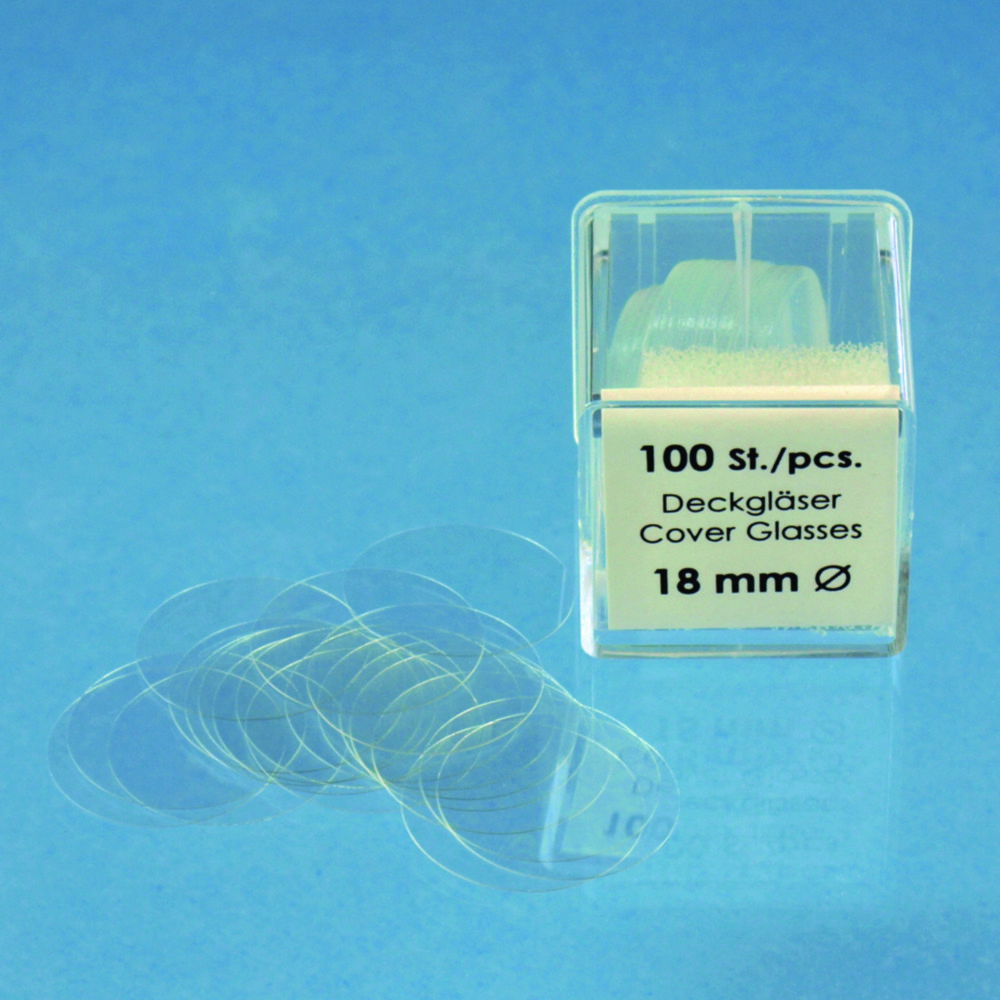
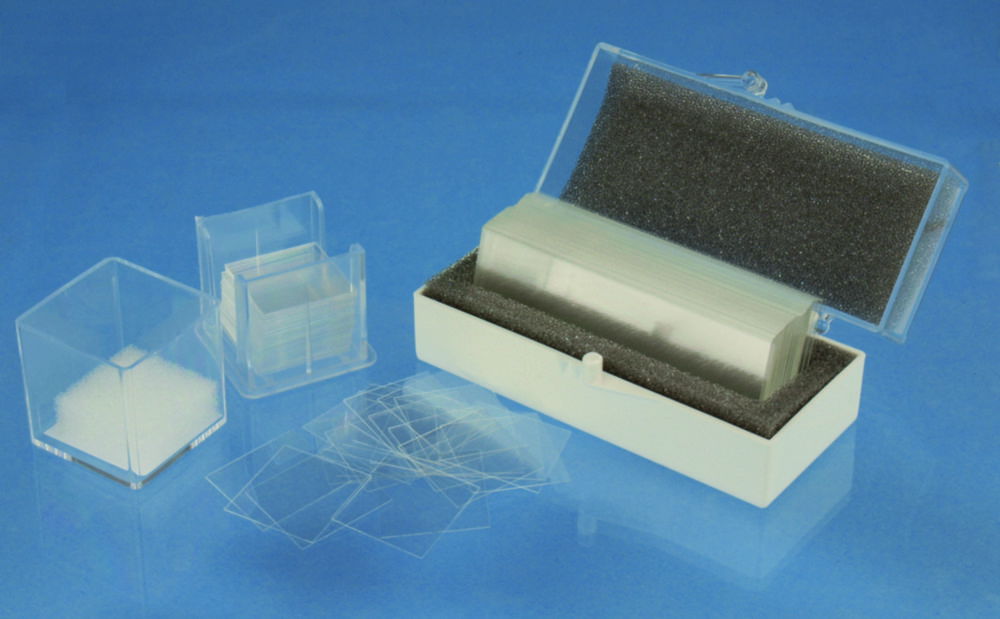
Cover Glasses, rectangular, Borosilicate glass D263® M
Made of colourless, chemically resistant Borosilicate glass D263® M of the first hydrolytic class acc. to ISO 8255-1, thickness 1 (0,13 to 0,16 mm).Packed in tightly closing plastic boxes of 100 pieces.Other thicknesses are available on request.
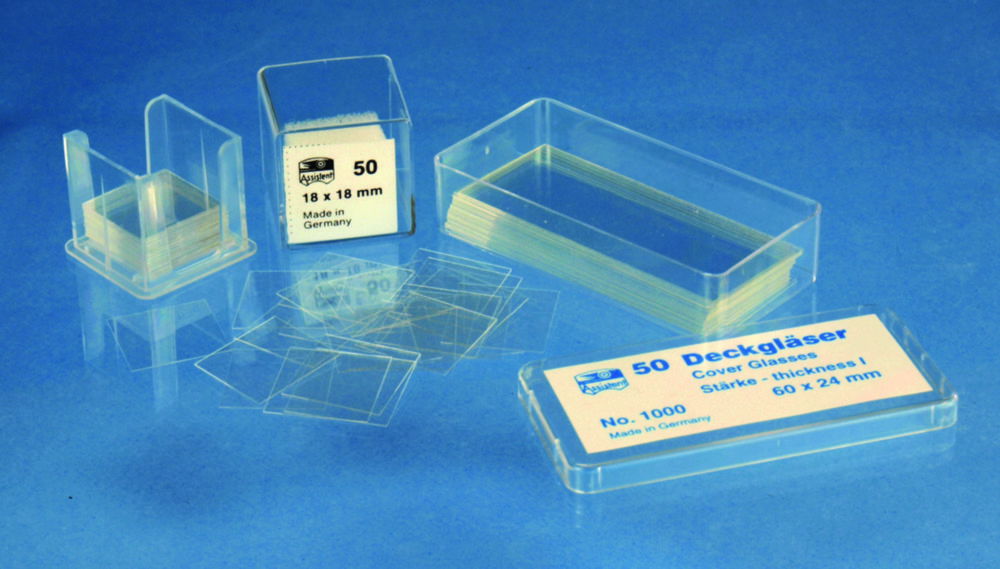
Cover Glasses, rectangular, Borosilicate glass D263® M
Made of colourless, chemically resistant Borosilicate glass D263® M of the first hydrolytic class acc. to ISO 8255-1, thickness 1 (0,13 to 0,16 mm).Packed in tightly closing plastic boxes of 50 pieces.Other thicknesses are available on request.
Cover slips, borosilicate glass D 263™ M
Made of chemically resistant borosilicate glass D 263™ M of the 1st hydrolytic class.Absolutely colourless, completely clear, suitable for fluorescence microscopyDIN ISO 8255Thickness No. 0 H (0.085 - 0.115 mm)In hinged lid boxes
Cover slips, borosilicate glass D 263™ M, square
Made of chemically resistant borosilicate glass D 263™ M of first hydrolytic classAbsolutely clear, suitable for fluorescence microscopySuper-hydrophobic surfaces on both sides (e.g. for crystallography)Thickness No. 1 (0.13 - 0.16 mm)
Cover slips, circular
Made of chemically resistant borosilicate glass D 263® M of the first hydrolytic classAbsolutely colourless, perfectly clear, suitable for fluorescence microscopyIn compliance with DIN ISO 8255Thickness No. 1 (0,13 - 0,16 mm) and 1.5H (0.170 mm ± 0.005 mm) as indicated
Cover slips, rectangular
Made of chemically resistant borosilicate glass D 263® M of the first hydrolytic classAbsolutely colourless, perfectly clear, suitable for fluorescence microscopyIn compliance with DIN ISO 8255Thickness No. 1 (0,13 - 0,16 mm) and 1.5H (0.170 mm ± 0.005 mm) as indicated
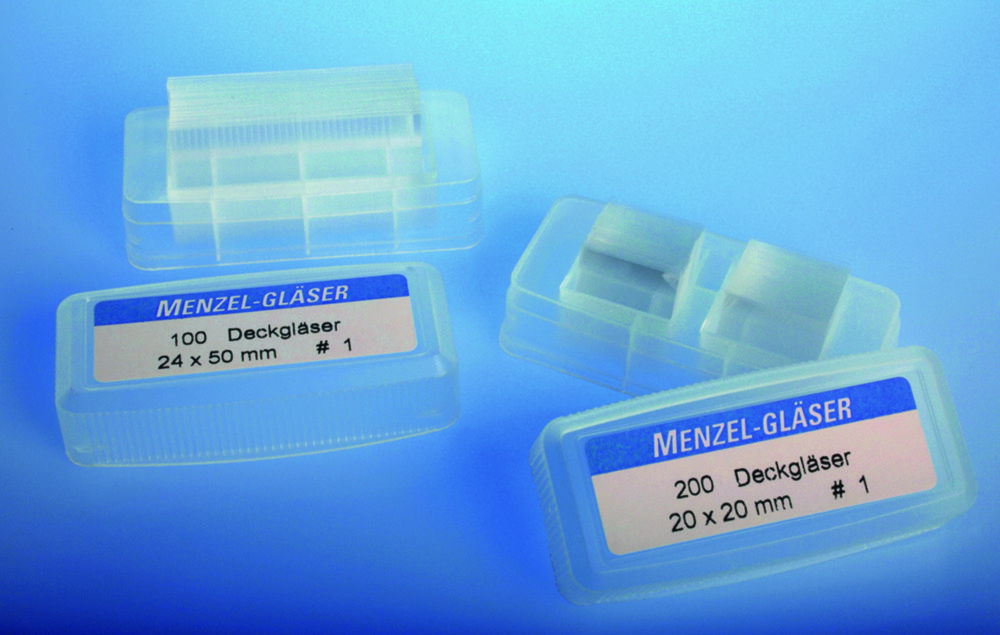
Cover slips, rectangular
Made of D263 M borosilicate glass. Accurate cutting free of flaws and blisters. Further thicknesses are available on request.
Cover slips, square
Made of D263 M borosilicate glass. Accurate cutting free of flaws and blisters. Further thicknesses are available on request.
Coverslip hoppers ClearVue™
Coverslip hoppers are used in automatic coverslipping machines and can be easily integrated into the laboratory. Made of colourless borosilicate glass. The cover glasses are characterised by high spectral transmission and a finely adjusted refractive index suitable for microscopy.No manual handling of coverslips requiredContinuous dispensing of clean coverslips
Coverslips Nunc™, Plastic, rectangular
Coverslips are treated on one side to optimise cell adhesion and growth. Resistant to commonly used solvents (e.g. xylene, acetone, acetic acid).Suitable for cell staining, mounting, embedding or scintillation countingCan be bent and cutLow gas permeabilityAutofluorescence in the range of 380 nm to 545 nm, therefore not recommended for phase contrast microscopy and fluorescence stainingCoverslips are treated on one side to optimise cell adhesion and growth. Resistant to commonly used solvents (e.g. xylene, acetone, acetic acid).Suitable for cell staining, mounting, embedding or scintillation countingCan be bent and cutLow gas permeabilityAutofluorescence in the range of 380 nm to 545 nm, therefore not recommended for phase contrast microscopy and fluorescence staining
Coverslips Nunc™, Plastic, round
Coverslips are treated on one side to optimise cell adhesion and growth. Resistant to commonly used solvents (e.g. xylene, acetone, acetic acid).Suitable for cell staining, mounting, embedding or scintillation countingCan be bent and cutLow gas permeabilityAutofluorescence in the range of 380 nm to 545 nm, therefore not recommended for phase contrast microscopy and fluorescence stainingCoverslips are treated on one side to optimise cell adhesion and growth. Resistant to commonly used solvents (e.g. xylene, acetone, acetic acid).Suitable for cell staining, mounting, embedding or scintillation countingCan be bent and cutLow gas permeabilityAutofluorescence in the range of 380 nm to 545 nm, therefore not recommended for phase contrast microscopy and fluorescence staining
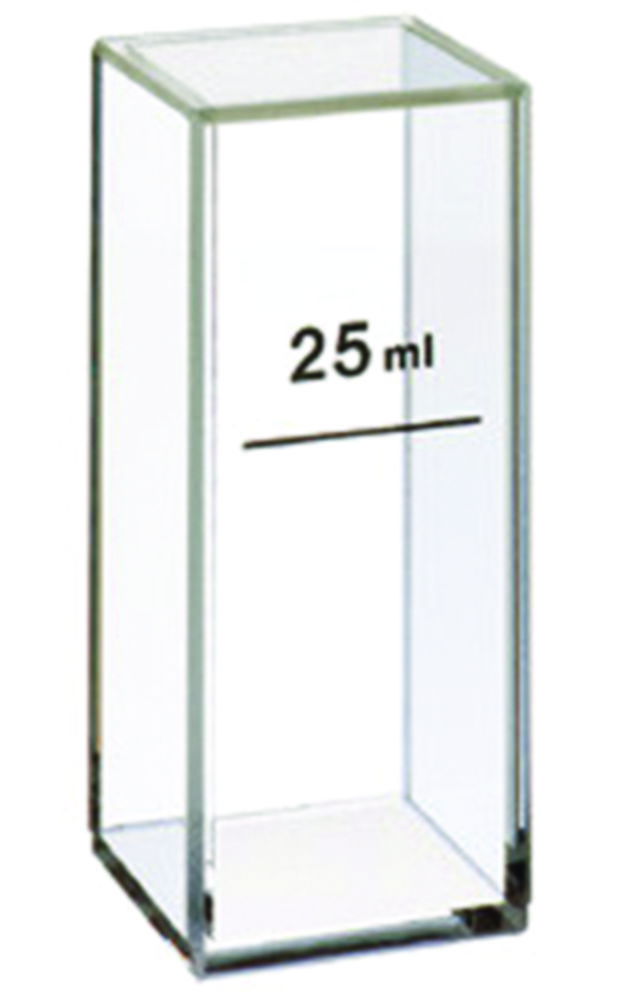
Cuvette for turbidity measurements, VIS-range
Wavelength: 360nm - 2500nmOptical Material: Optical glass

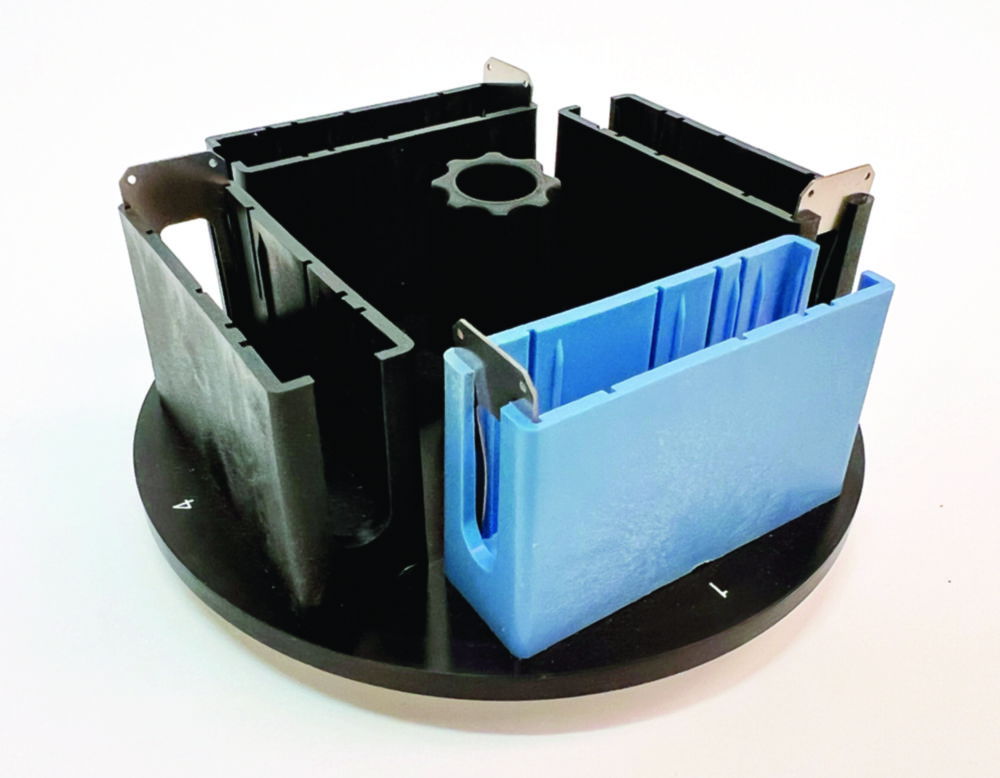

Cuvette rack with attached lid, PP
For safe handling and holding up to 12 cuvettes with a 10 mm light path. These racks consist of hinged lids with secure clasps and removable inserts for easy cleaning. The height of the lid is designed to accommodate all spectrophotometer cells - even those with covers or stoppers.
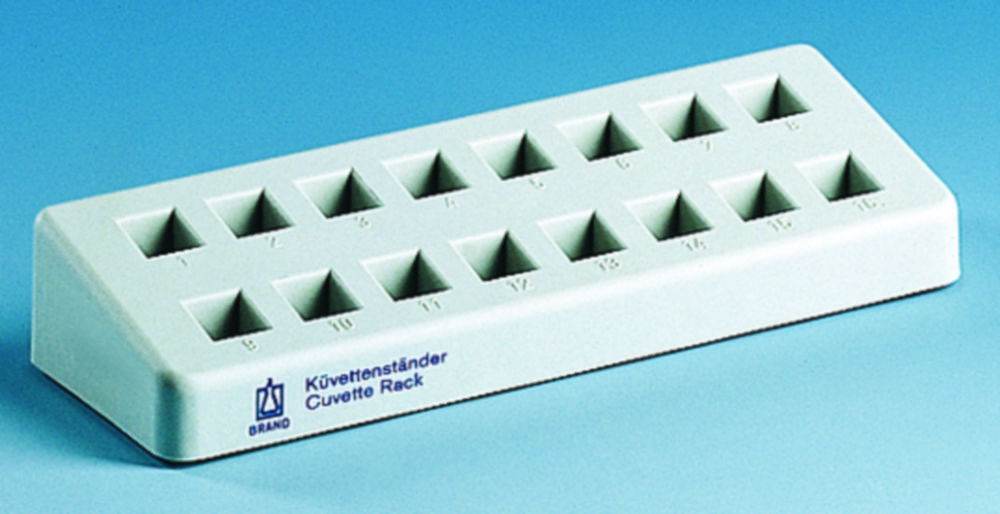
Cuvette stand, acrylic glass
Cuvette stand for 6 round cuvettes with a diameter of 24 mm. The cuvettes can be placed safely without slipping or tipping over. The transparent acrylic glass allows to observe changes and colour changes unobstructed.