
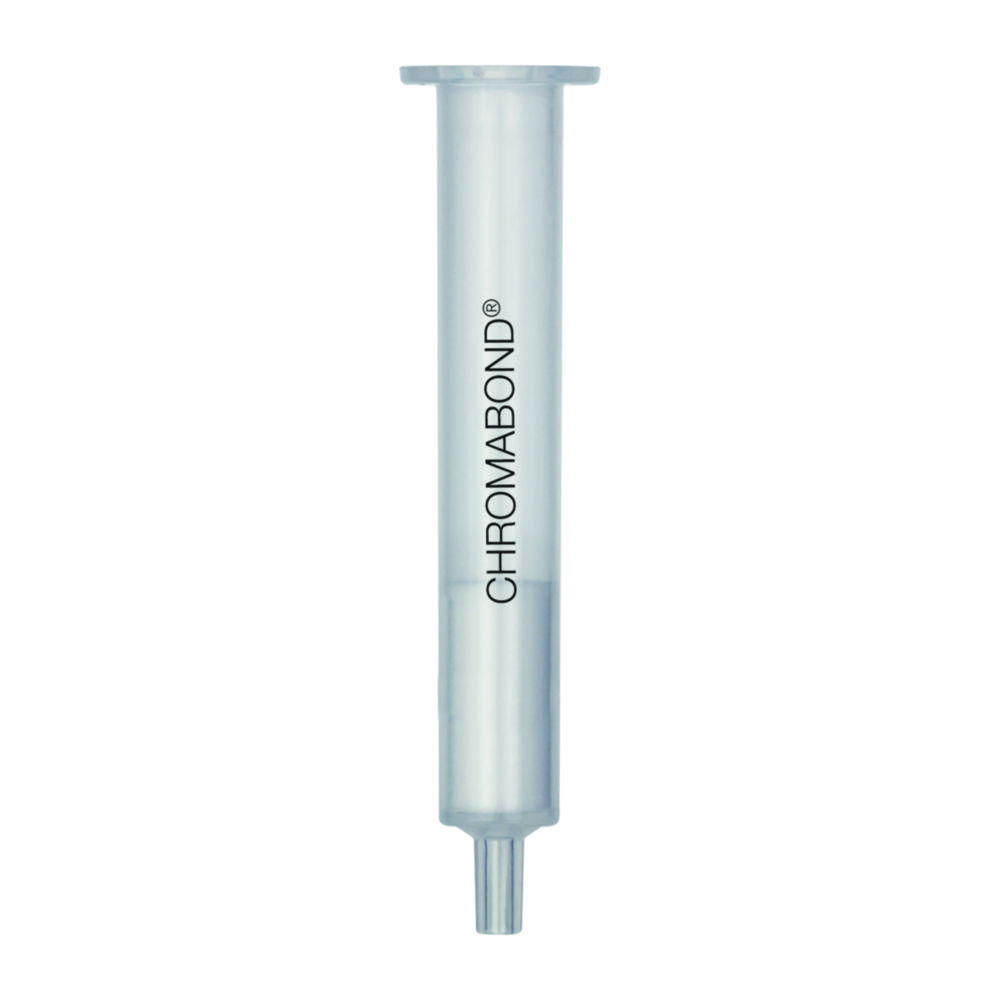
CHROMABOND® PA
Polyamide 6 for SPEMatrix polyamide 6, unmodified, high purity, particle size 40 to 80µm.Recommended application: flavonoids, PAH.

CHROMABOND® PS-OH- / PS-H+
The innovative cation exchanger offers:mixed-mode SPE phase with distinct cation exchange and RP properties excellent enrichment of basic analytesmodern support polymer with optimised pore structure and large specific surfacegood reproducibility, reliable and cost-efficient analysesmore aggressive washing procedures for matrix removal possiblecleaner samples and protection of analytical HPLC and GC instrumentationquantificationof analytes from heavily contaminated sampleslower limits of detection also for critical matrices... the perfect fit for basic analytes in comination with CHROMABOND® HR-XSPE phases for polymer-based RP and ion chromatographyBase material: high-purity polystyrene-divinylbenzene copolymers (PS/DVB) pore size 100 Å, paricle size 100µm. Verly low degree of swelling, thus very well suited for chromatography. Different modifications for different applications from elimination of nonpolar compounds up to removal of specific polar comonents.Recommended application:Removal of interfering compounds improves chromatographic separtions, if the interfering components overlap with the analyte in the chromatogramimproves lifetime of the chromatographic column, since interfering components can irreversibly block the column packing
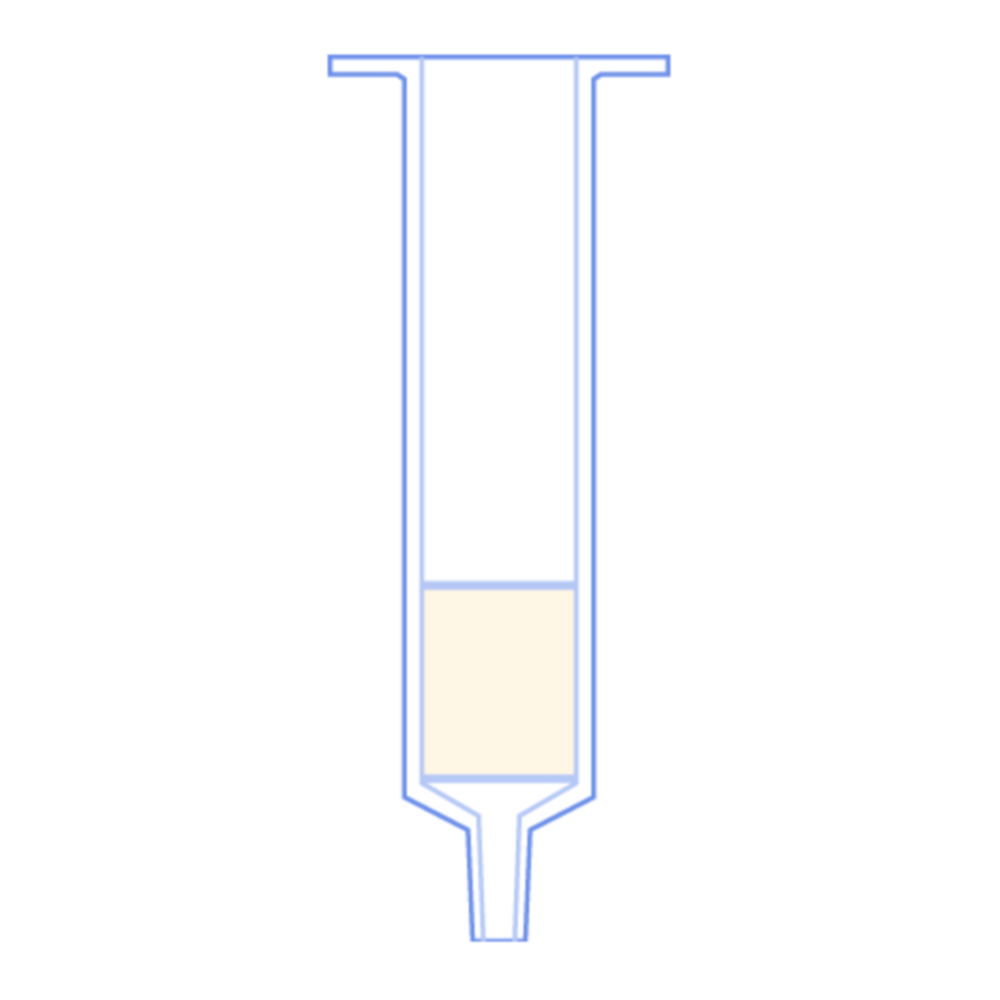
CHROMABOND® PSA
Propylsulphonic acid modified silica cation exchanger for SPEBase material silica, pore size 60Å, particle size 45µm, specific surface 500m²/g, pH stability 2 to 8, propylsulphonic acid modified silica, very strong cation exchanger (capacity ~ 0.7meq/g), contrary to the SA phase no P-P interactions.Recommended applications: weak cations.
CHROMABOND® QuEChERS extraction buffer mixes / clean-up mixes
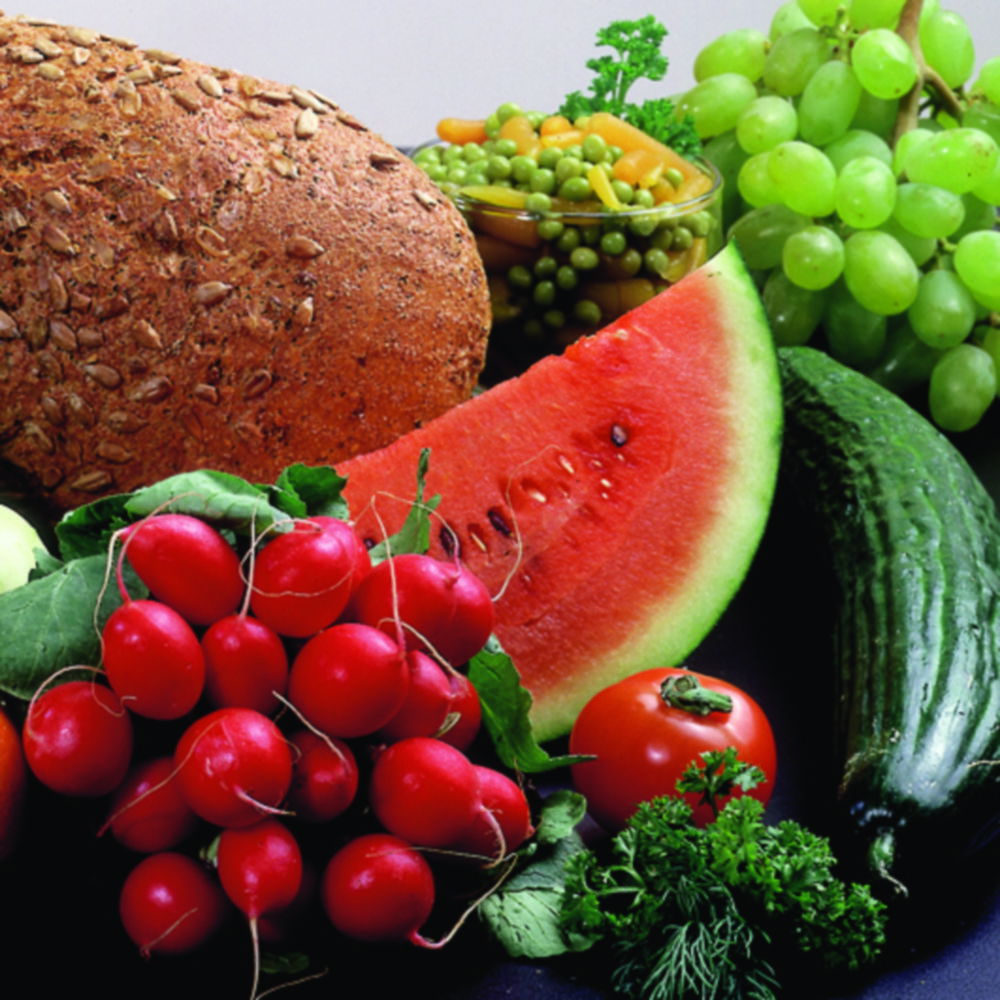
QuEChERS method and pre-mixesWithin a few years after its devleopment by Anastassiades et al. the QuEChERS method has gained a leading position for determination of pesticide residues in food by GC-MS or LC-MS allowing rapid and cheap clean-up of strong matrix-contaminated samples.Standard clean-up of food samples10 g sample are homogenised with 10 ml acetonitrile. After adding the internal standard the sample is shaken with 4 g MgSO4 and 1 g NaCI and afterwards centrifuged. 1 ml of the supernantant is spiked with 25 mg CHROMABOND® Diamino and 150 mg MgSO4 and shaken again. After centrifugation the supernatant is injected into the GC/MS.Extraction mixtures for sample preparation for determination of pesticides in food samples.MACHEREY-NAGEL offers a number of individually weighed and pre-mixed buffers and extraction mixtures, specially composed for different sample matrices.Mix I and Mix II are extraction mixtures, Mix III to Mix VI are clean-up mixtures.The food samples will be extracted with either Mix I or Mix II.Afterwards they will be purified with one of the following mixtures:Mix III (samples with low fat content; e.g. apples, strawberries),Mix IV (moderate content of chlorophyll and carotinoids; e. g. carrots, lettuce),Mix V (high content of chlorophyll and carotinoids; e. g. bell peppers, spinach),Mix VI (high fat content; e. g. avocados).Every mix is prepacked in a 15 ml centrifuge tube. Pack of 50 pieces.
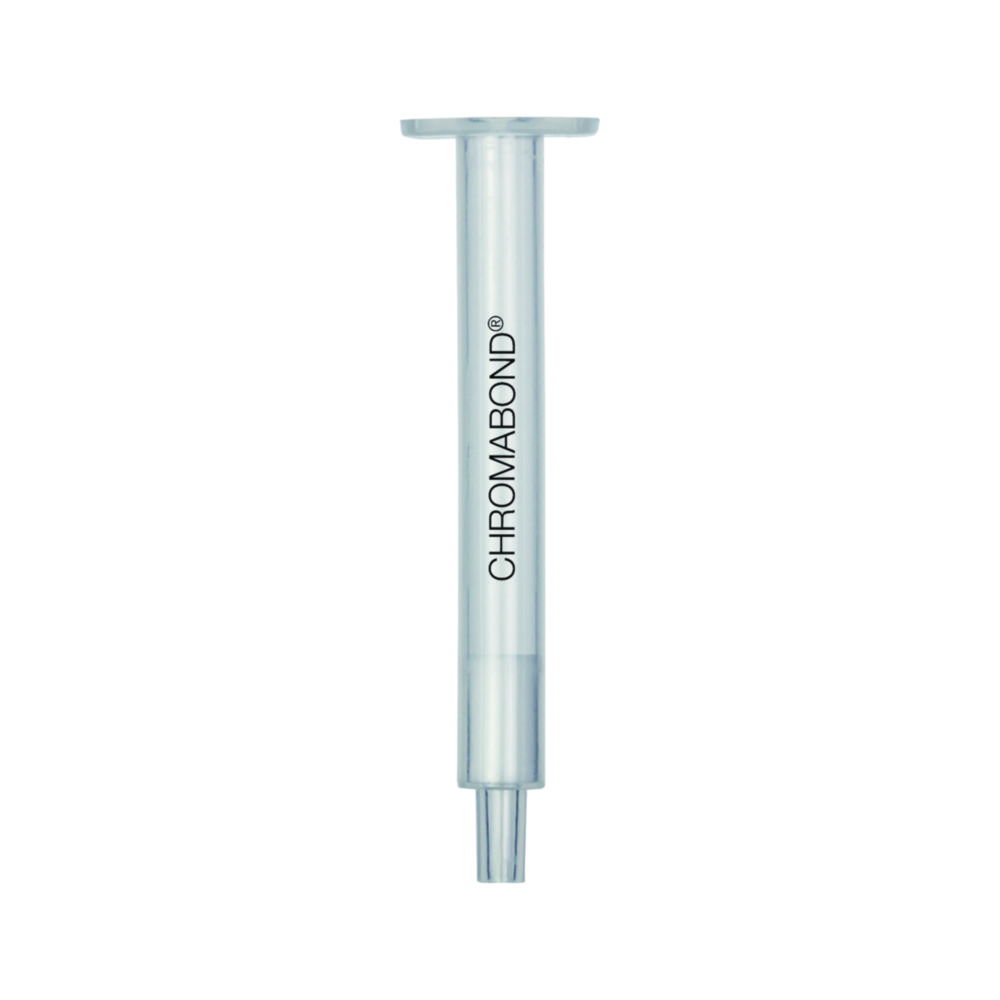
CHROMABOND® SA
Benzenesulphonic acid modified silica cation exchanger for SPE (SCX)Base material silica, pore size 60Å, particle size 45µm, specific surface 500m²/g, pH stability 2 to 8, benzenesulphonic acid modified silica, strongly acidic cation exchanger (capacity ~ 0.5meq/g). Adsorbent with hydrophobic and Π-Π interactions (benzene ring). Ion exchange of organic compounds from aqueous matrix. Elution of interesting compounds with solvent systems, which compensate the ionic and nonpolar interactions, e.g. methanolic HCl.Recommended application: amino acids, amines, chlorophyll, PCB.
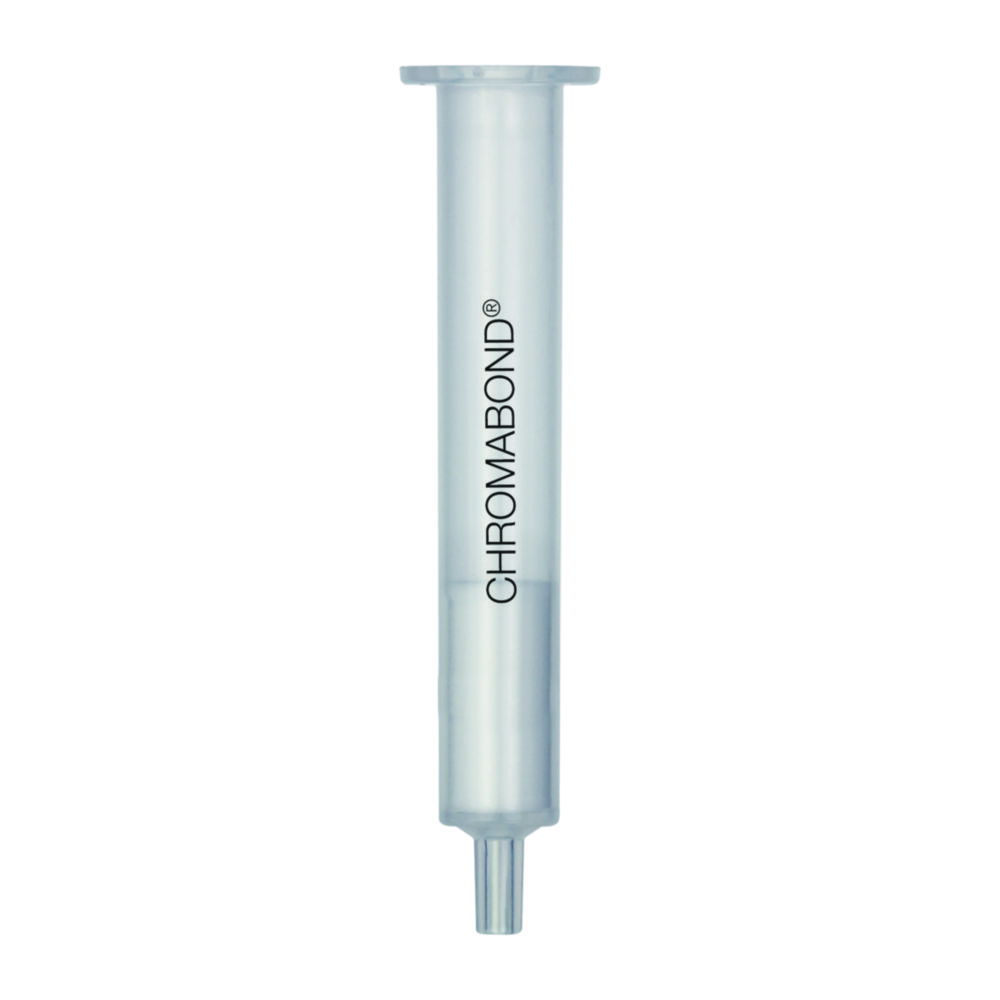
CHROMABOND® SA/SiOH
Combination phase for SPE analysis of PCBSpecial combination phase:SA: strongly acidic cation exchanger based on silica with benzenesulphonic acid modification.SiOH: unmodified silica for removal of polar compounds.Recommended application: extraction of PCB from waste oil (hexane extract).
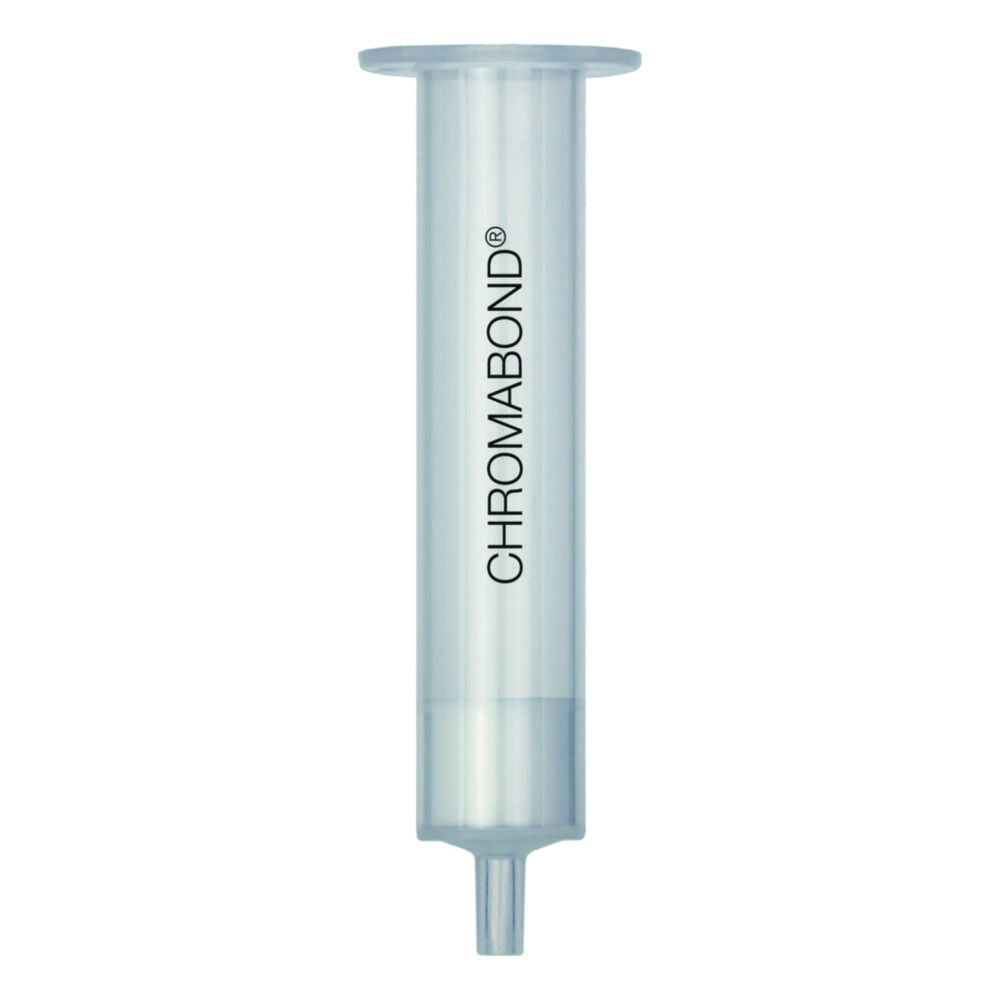
CHROMABOND® SB
Quaternary ammonium modified silica anion exchanger for SPE (SAX)Base material silica, pore size 60 Å, particle size 45 µm, specific surface 500 m²/g, pH stability 2 to 8. Silica modified with quaternary amine. Strongly basic anion exchanger (capacity ~ 0.3 meq/g). Not suited for very strong anions such as sulphonic acids, because these are difficult to elute.Recommended application: organic acids, caffeine, saccharin.
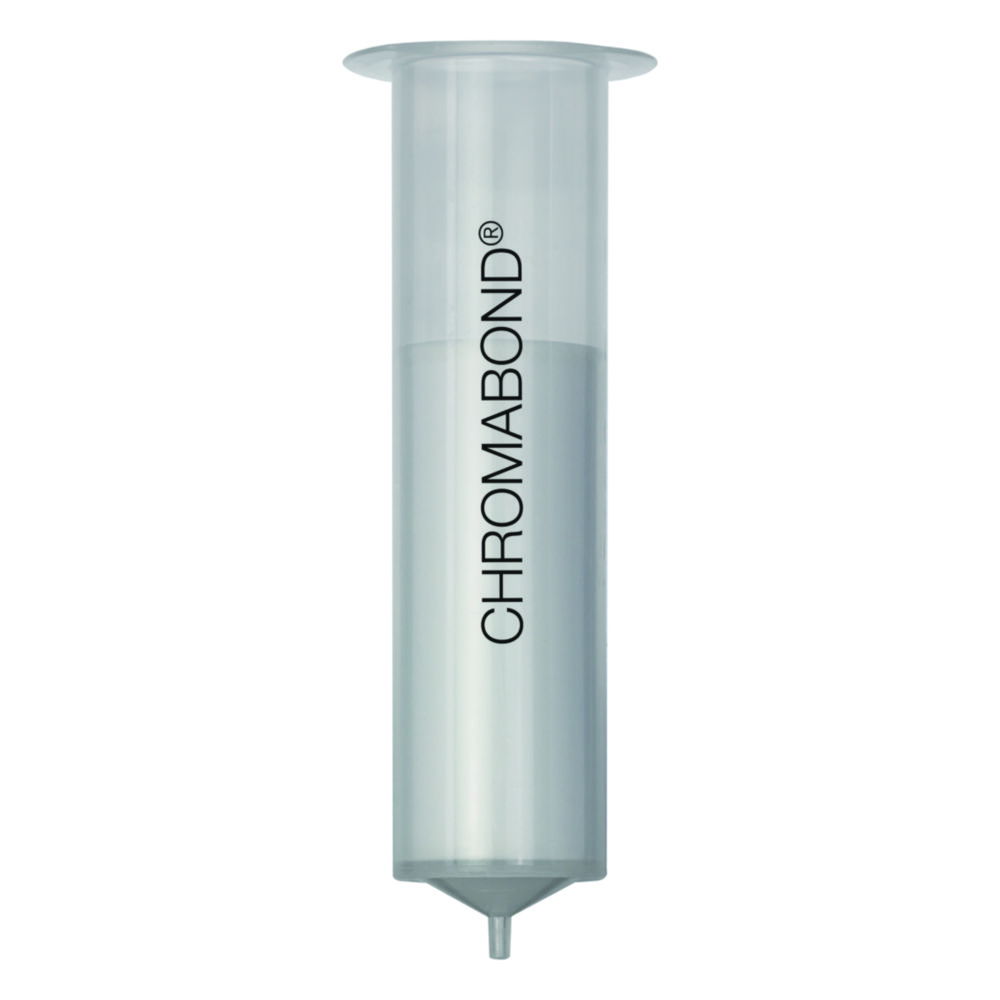
CHROMABOND® SiOH
Unmodified silica phase for SPEUnmodified, weakly acidic silica, pore size 60Å, particle size 45µm, specific surface 500m²/g, pH stability 2 to 8, very polar, adsorbs humidity from air, for this reason it should be kept well closed and if necessary dried before use due to its high affinity for polar compounds it should not be conditioned with polar (e.g. methanol) or water-containing solvents.Recommended applications: aflatoxins, chloramphenicol, pesticides, steroids, vitamins.
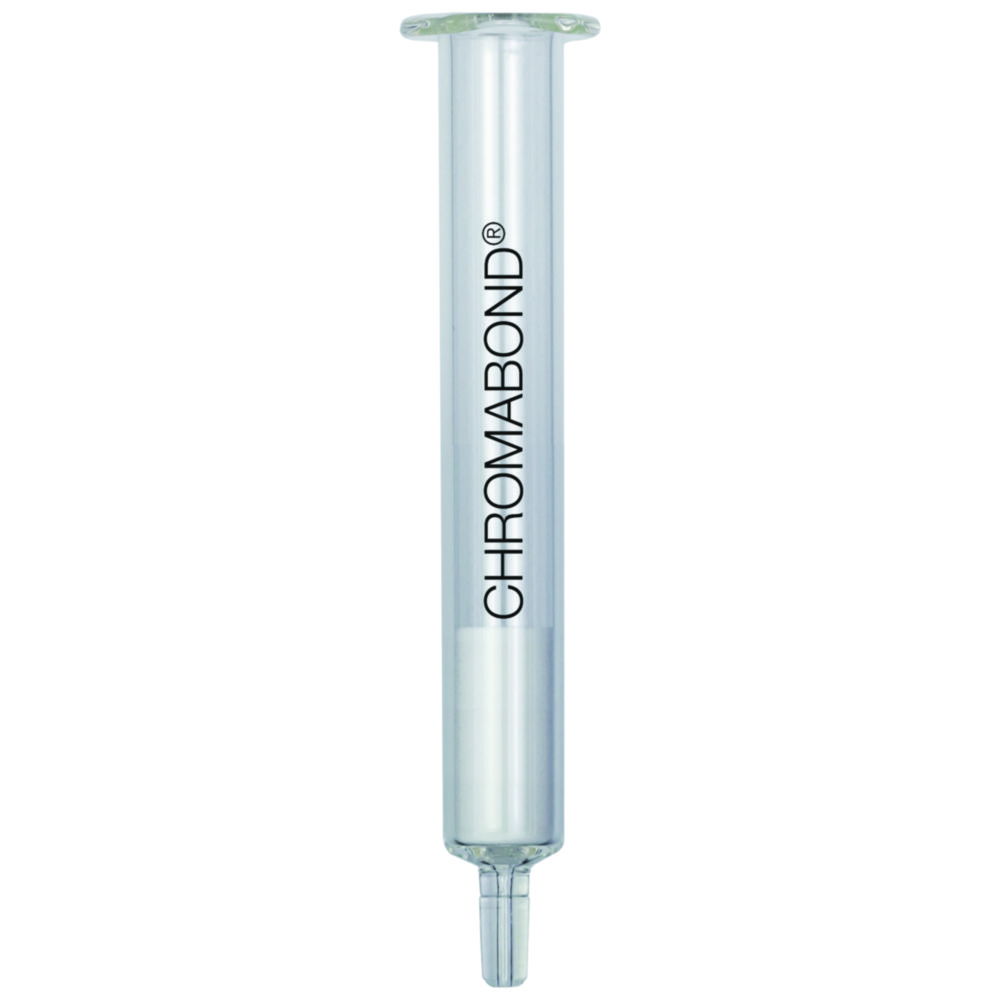
CHROMABOND® SiOH-H2SO4/SA
Combination phase for SPE analysis of PCBsH2SO4: H2SO4-impregnated silica phase for oxidation of accompanying compounds to ionic and/or polar compounds.SA: strongly acidic cation exchanger based on silica with benzenesulphonic acid modification for removal of ionic and sulphur-containing compounds.Recommended application: extraction of PCBs from oil with reference to German industrial standard DIN 51527, part 1. This combination column is used together with a SiOH column.

CHROMABOND® vacuum manifolds and accessories
For simultaneous preparation of up to 12 or 24 samples, replacement parts and accessories for special applications.Vacuum manifold complete consists of: glass cabinet with lid and lid gasket, removable needles on lower side of lid, vacuum gauge, control valve, valves and caps, variable rack.
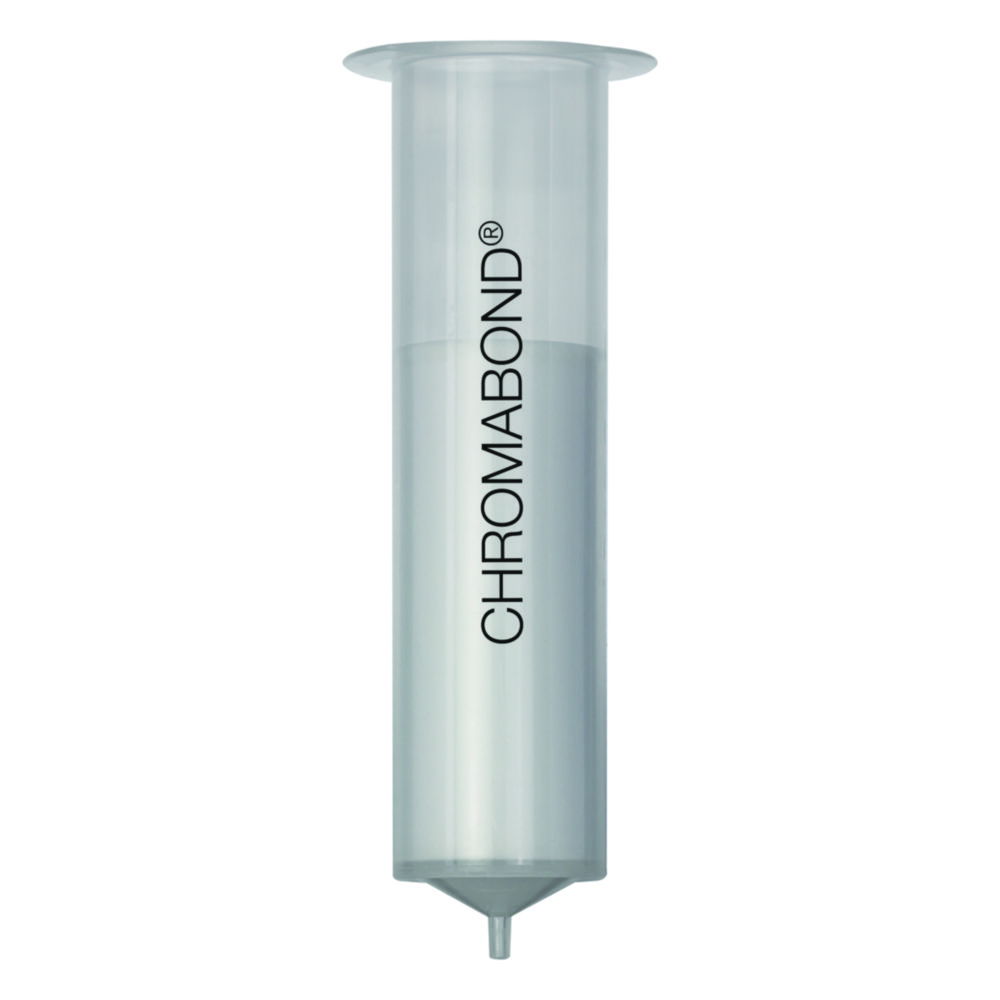
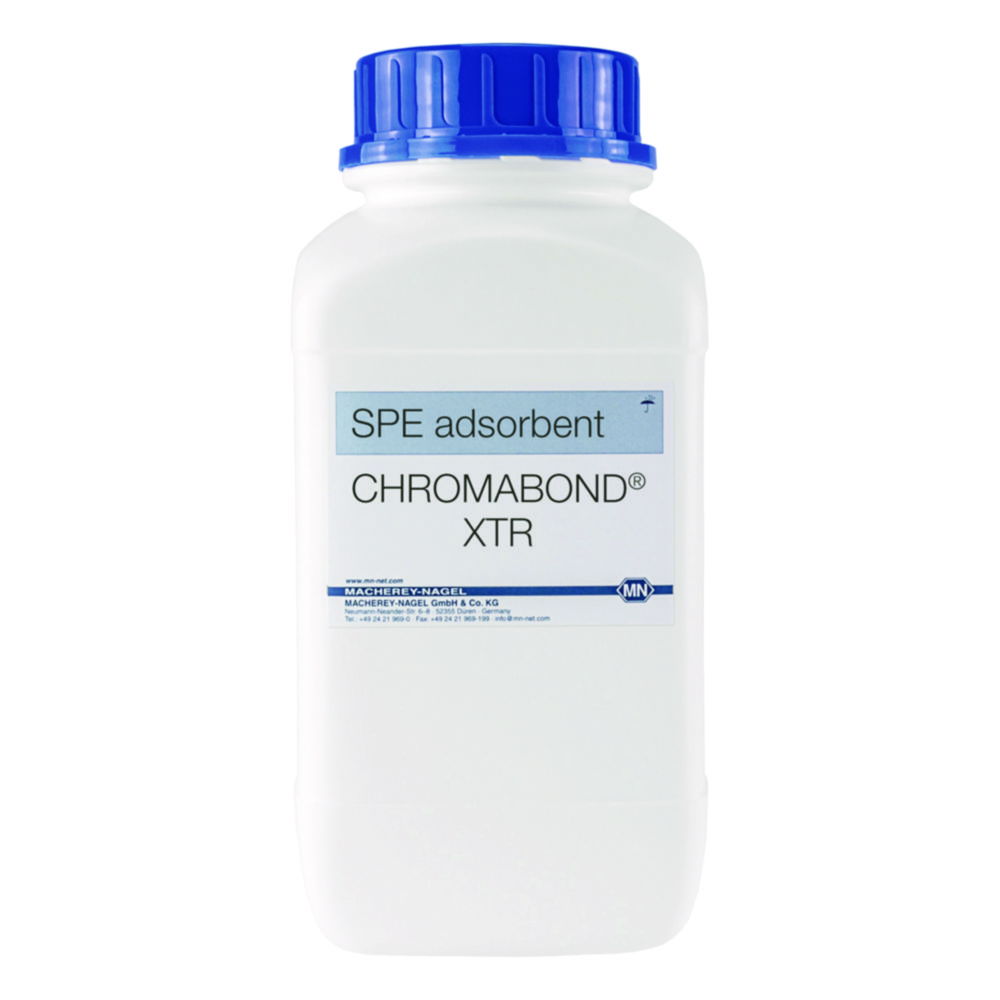
CHROMABOND® XTR
Kieselguhr phase for liquid-liquid extractionBase material coarse-grained kieselguhr, large pore size, high pore volume, constantly high batch-to-batch quality, pH working range 1 to 13.Application: liquid-liquid extraction of highly viscous aqueous solutions such as physiological fluids (blood, plasma, and serum) in clinical chemistry, dyes in textiles, environmental and food analysis.Glass columns availlable on request.
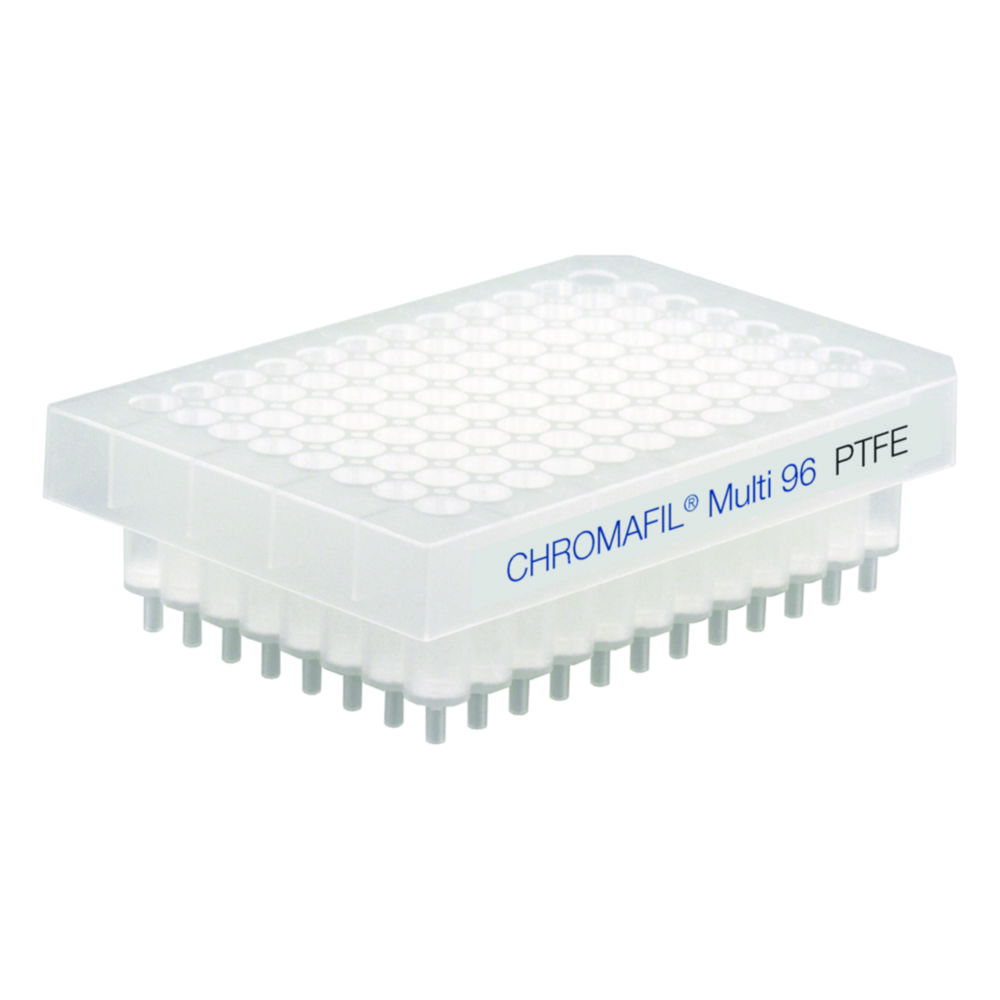
CHROMAFIL® MULTI 96 filter plates
96-well polypropylene plates for simultaneous filtration of 96 samplesAdvantages of this high-throughput system are:economical by saving time and solventuse of multi-channel pipettors facilitates liquid transfer stepsreadily adaptable to all common automated/robotic handling systems -minimised dead volume (£ 40µl)membrane materials correspond to the respective CHROMAFIL® syringe filters
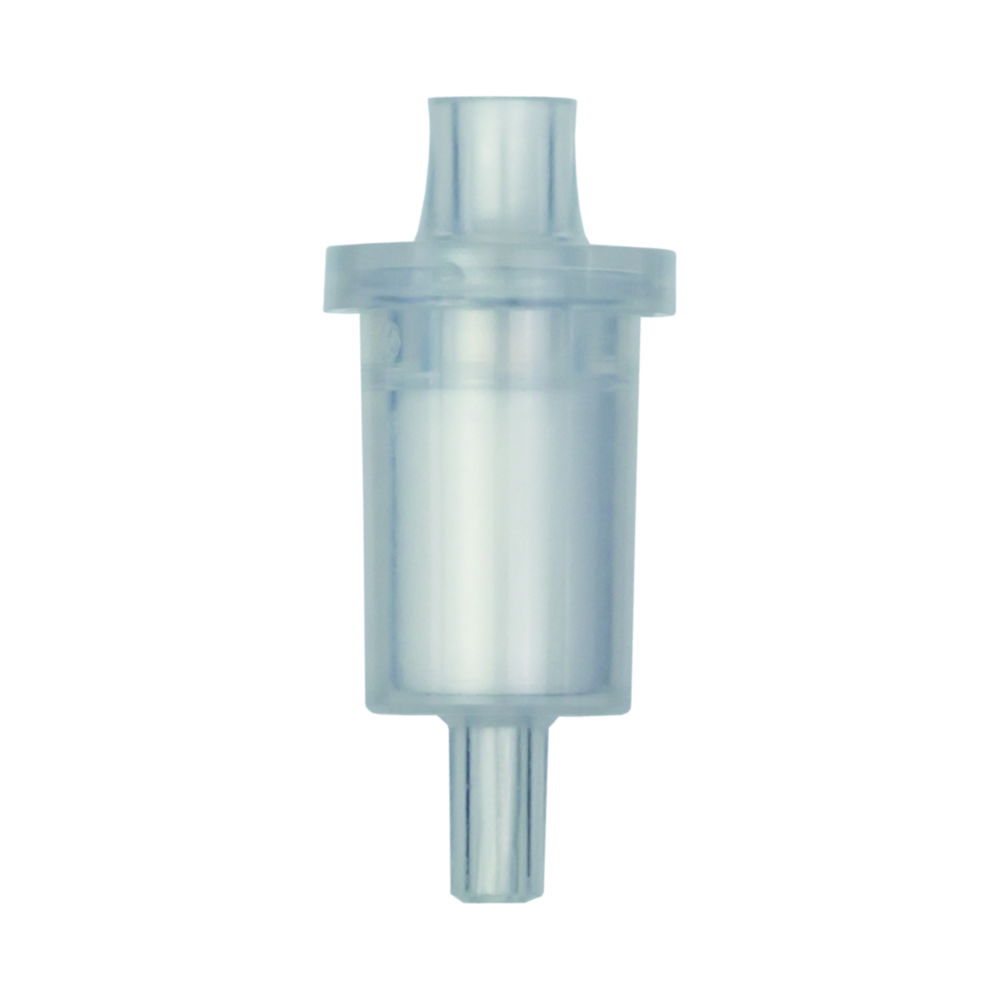
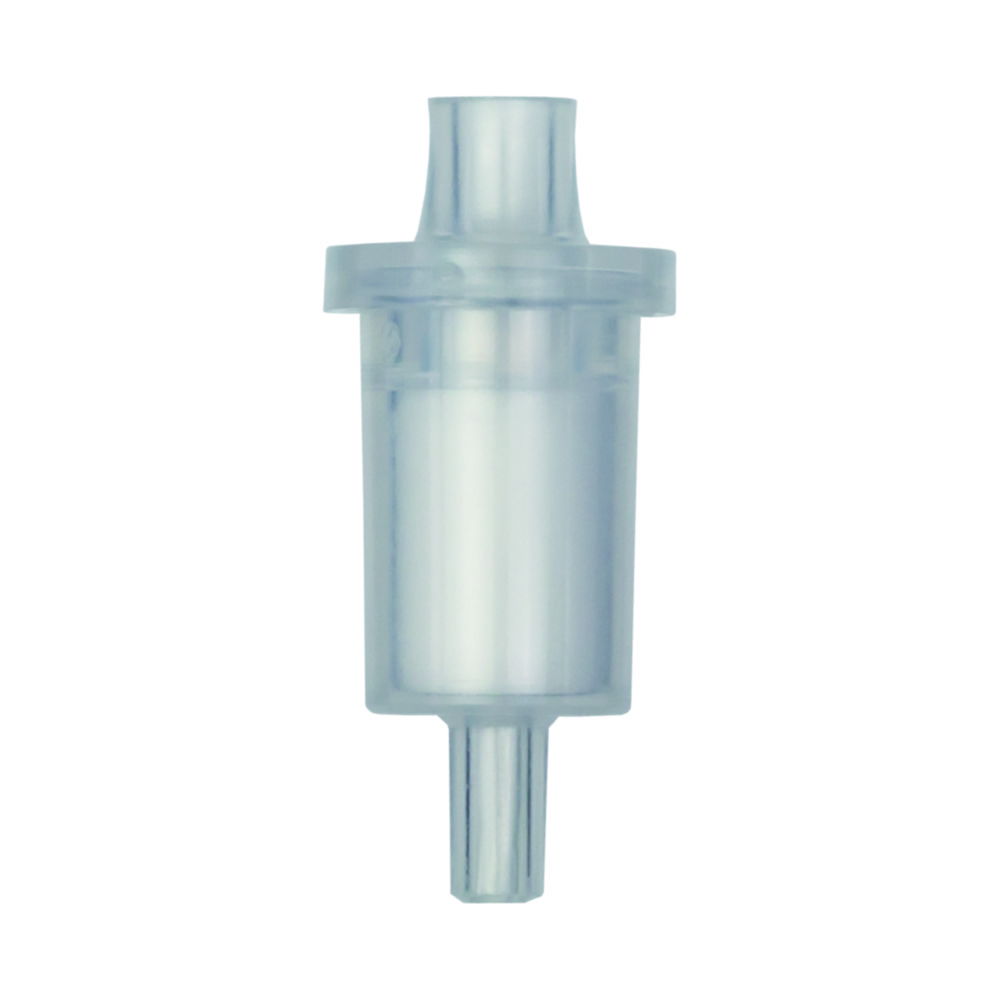
CHROMAFIX® C18
Octadecyl modified silica phase for SPE, not endcappedBase material silica, pore size 60 Å, particle size 45 µm for C18, specific surface 500 m²/g, pH stability 2 to 8 octadecyl phases, not endcapped, carbon content 14 % possesses more free silanols (SiOH), which allow secondary interactions with polar groups of the analytes.Recommended applications: non-polar compounds, pesticides.
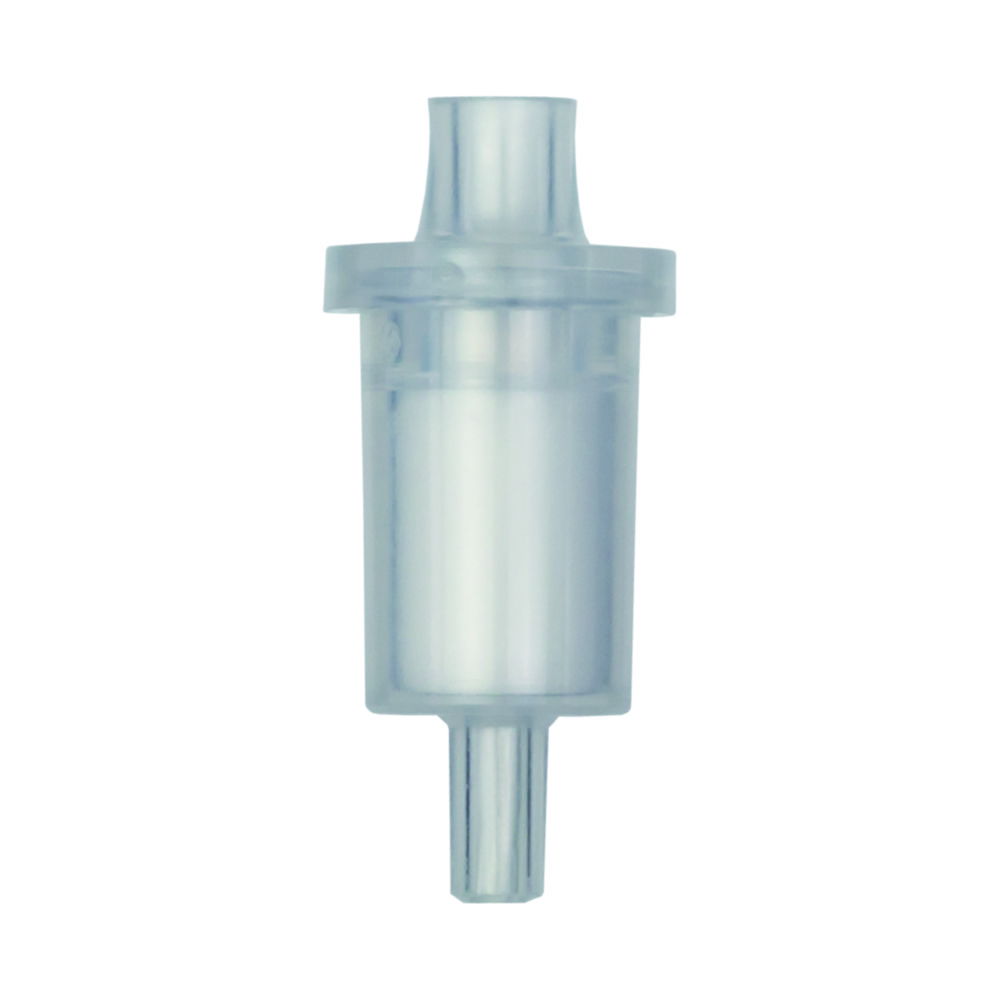
CHROMAFIX® C18 ec
Octadecyl-modified silica gel phase for SPE, endcappedBase material: Silica, pore size 60 Å, particle size 45 µm, specific surface 500 m2/g, pH stability 2-8 octadecyl phases, endcapped, carbon content 14 %, non-polar, hydrophobic interactions with a wide variety of organic compounds.Recommended application: Non-polar compounds, aflatoxins, amphetamines, antibiotics, antiepileptics, barbiturates, caffeine, drugs, preservatives, fatty acids, nicotine, PAHs, pesticides, PCBs, heavy metals, vitamins.Very well suited for desalting of samples.
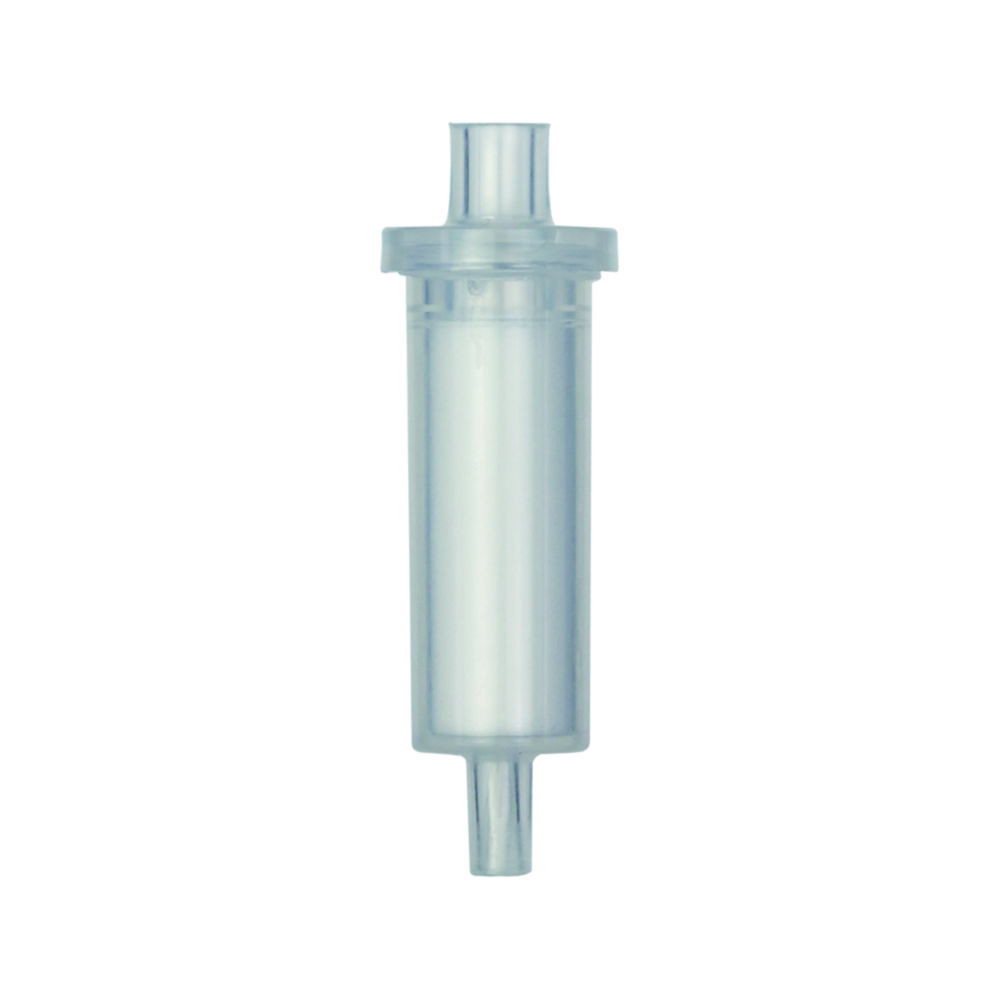
CHROMAFIX® Dry
Special phase for drying organic samplesBasic material: Sodium sulfate.Recommended application: removal of traces of water from organic solutions.
CHROMAFIX® HR-XC columns
The innovative cation exchanger offers:mixed-mode SPE phase with distinct cation exchange and RP properties excellent enrichment of basic analytesmodern support polymer with optimised pore structure and large specific surfacegood reproducibility, reliable and cost-efficient analysesmore aggressive washing procedures for matrix removal possiblecleaner samples and protection of analytical HPLC and GC instrumentationquantificationof analytes from heavily contaminated sampleslower limits of detection also for critical matrices... the perfect fit for basic analytes in comination with CHROMABOND® HR-X
CHROMAFIX® PS
The innovative cation exchanger offers:mixed-mode SPE phase with distinct cation exchange and RP properties excellent enrichment of basic analytesmodern support polymer with optimised pore structure and large specific surfacegood reproducibility, reliable and cost-efficient analysesmore aggressive washing procedures for matrix removal possiblecleaner samples and protection of analytical HPLC and GC instrumentationquantificationof analytes from heavily contaminated sampleslower limits of detection also for critical matrices... the perfect fit for basic analytes in comination with CHROMABOND® HR-X
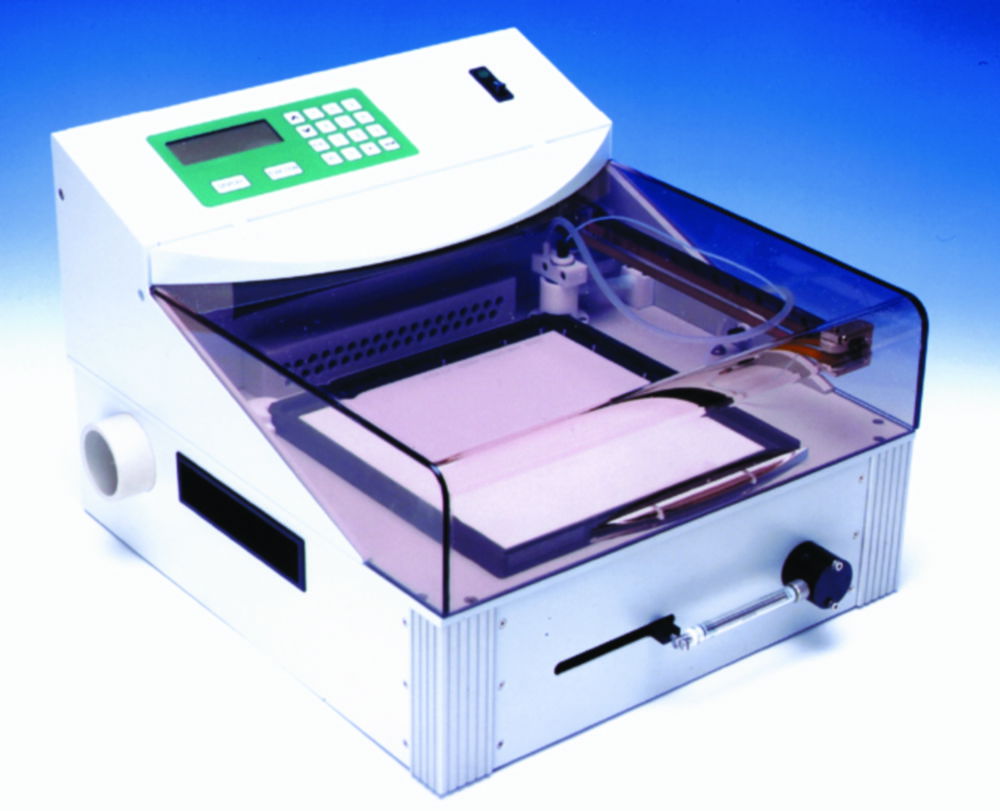
ChromaJet DS 20
Trace accurate spraying - economical and environment-friendly. ChromaJet DS 20 microprocessor-controlled, automatic spray chamber produces a high precision spray jet for use on thin-layer chromatography plates. Offers a choice of spray settings with memory storage for repeat use. Reagent consumption is greatly reduced. The spray programme is managed via control and editing software.Dimensions:440 x 405 x 275 mmSupply requirements:230 V 50/60 Hz

Chromatographic columns, DURAN® tubing
Made of DURAN® tubing. Basic chromatographic columns with indentations above the stopcock for placing a cotton plug, with NS socket, with PTFE stopcock and retaining device.

Chromatographic columns, PTFE stopcock, DURAN® tubing
Made of DURAN® tubing. Chromatography columns with sintered frit (porosity 0), NS socket and PTFE stopcock.
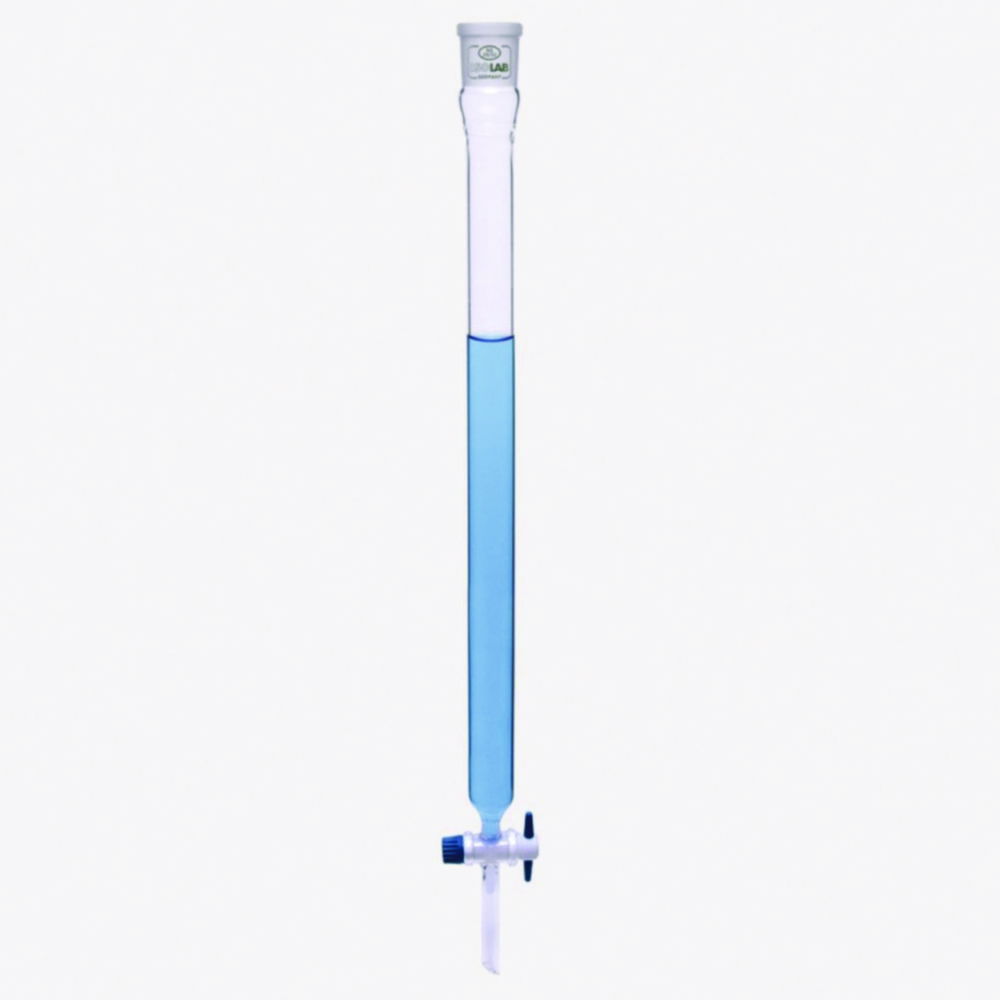
Chromatographic columns, PTFE- / or Valve Stopcock, borosilicate glass 3.3
Chromatography columns with socket and with frit. Manufactured from borosilicate glass 3.3 which is resistant to heat and almost all chemicals. NS necks are in compliance with DIN 12242 standards.
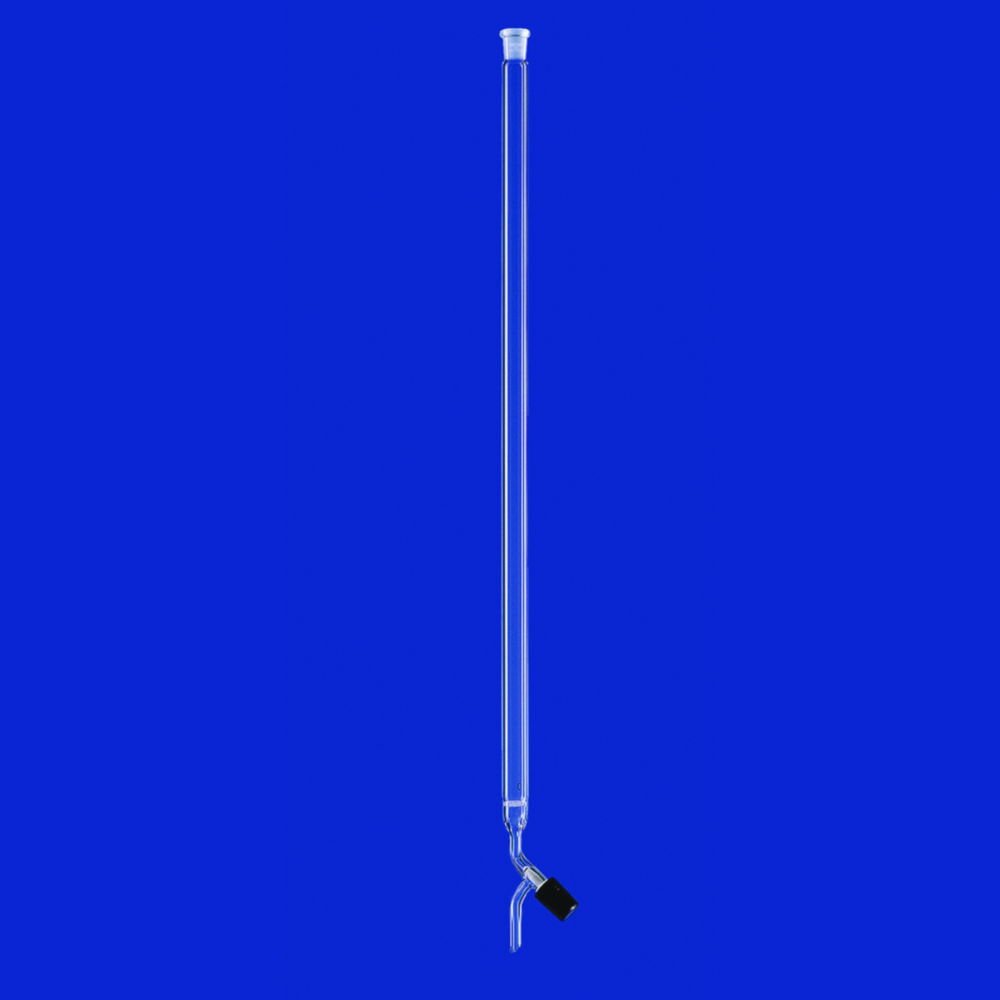
Chromatographic columns, valve stopcock, DURAN® tubing
Made of DURAN® tubing. Chromatography columns with sintered frit (porosity 0), NS socket and needle-valve stopcock (bore 0 - 2.5 mm).
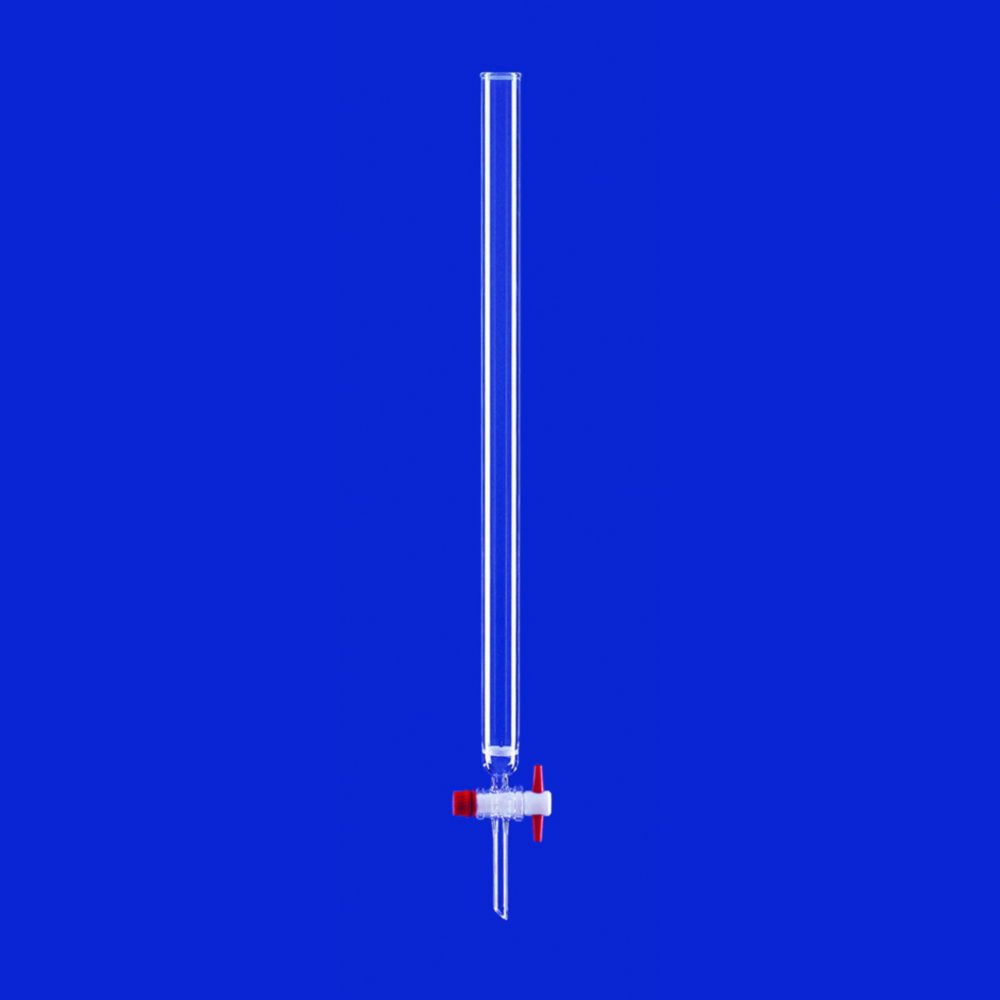
Chromatographic columns, with beaded rim and PTFE stopcock, DURAN® tubing
Made of DURAN® tubing. Chromatography columns with sintered frit, porosity 0.
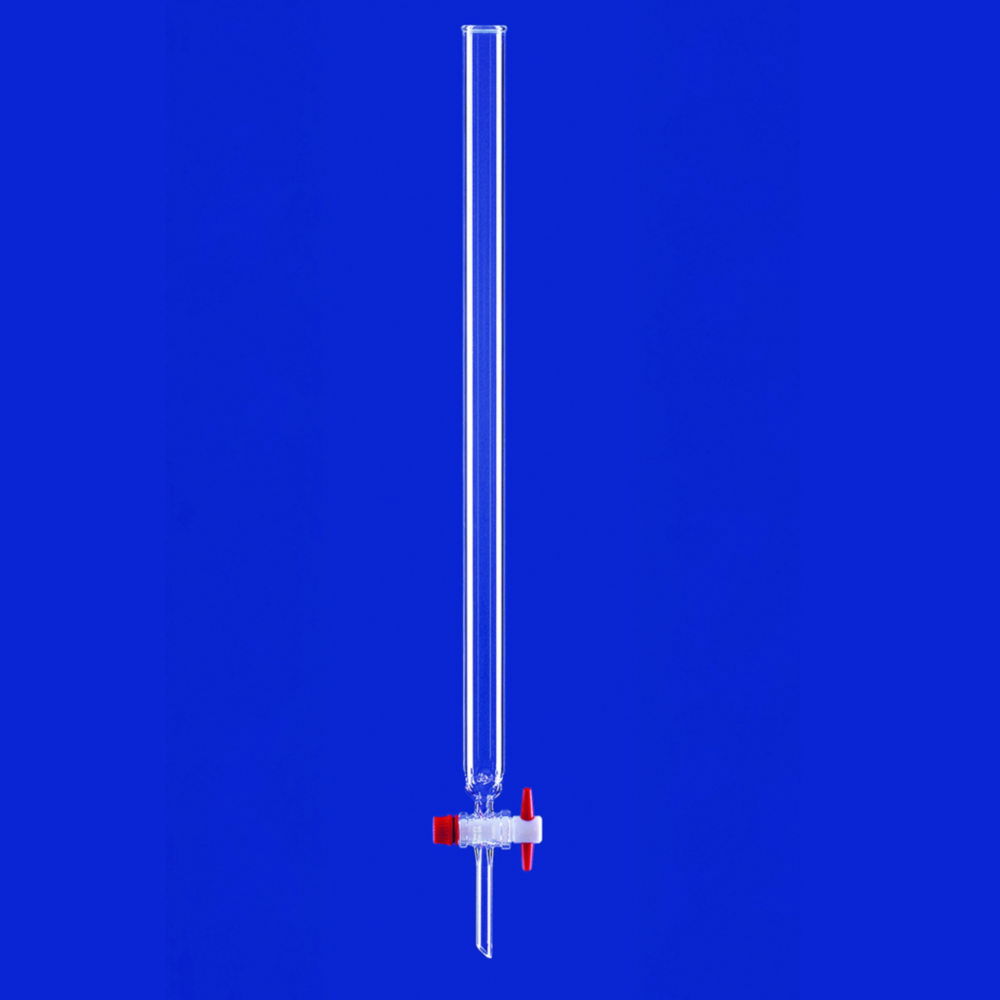
Chromatographic columns, with beaded rim, DURAN® tubing
Made of DURAN® tubing. With PTFE stopcock and retaining device. With indentations above the stopcock for placing a cotton plug.
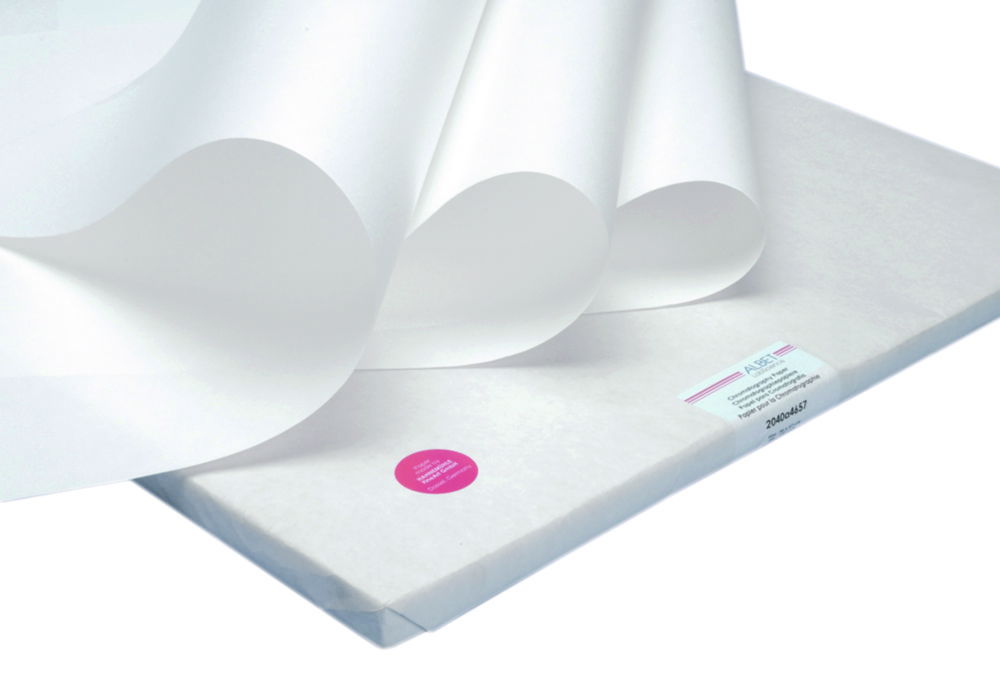
Chromatography Paper
Recommended for chromatographic analysis and preparations.Made from pure linters with an α-cellulose content of > 98%High-performance resolution and wet strengthThe fibres are oriented in predominantly one directionThicker papers allow higher sample volumesLower capillary rises offer higher resolutions
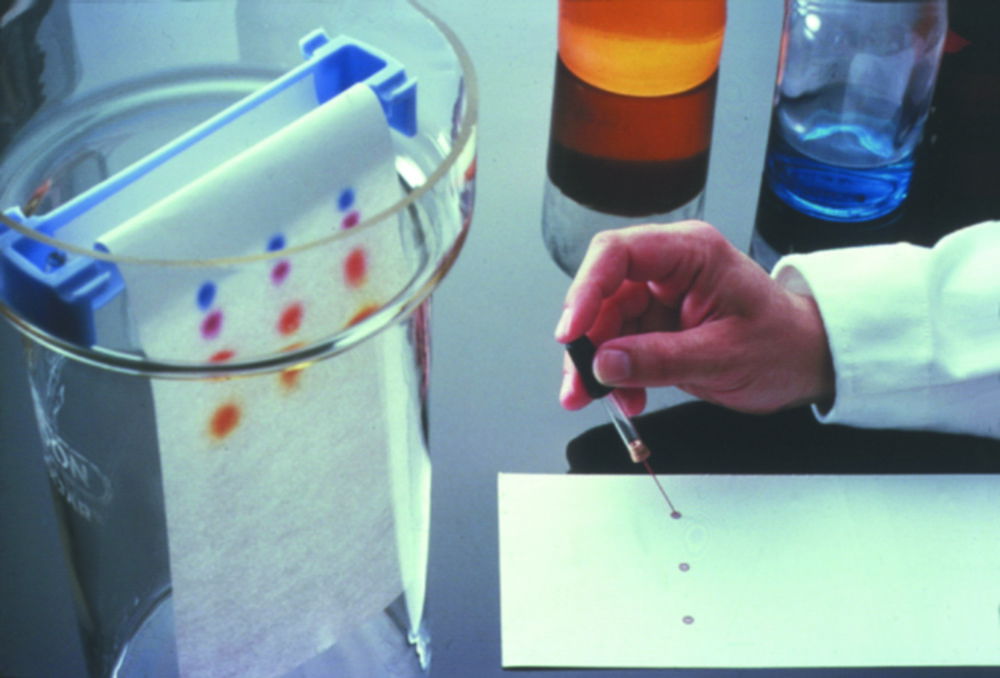
Chromatography paper / Ion exchange papers
Whatman chromatography papers are the most widely used papers for chromatography worldwide. This acceptance and usage reflects the purity, high quality and consistency of Whatman papers. These qualities are relied upon by chromatographers and essential to successful reproducible chromatography. Whatman chromatography paper media are made from specially selected cotton cellulose. They are rigorously quality controlled for characteristics important to the chromatographer and to ensure uniformity within the grade.1 Chr world standard chromatography paper. A smooth surface, 0.18 mm thick with a linear flow rate (water) of 130 mm/30 min. Good resolution for general analytical separations.3MM Chr widely used as a blotting paper, 3MM Chr is used in both electrophoresis and for general chemistry. A medium thickness paper (0.34 mm) used extensively for general chromatography and electrophoresis. Flow rate is 130 mm/30 min.3 Chr medium thickness paper (0.34 mm) with a flow rate of 130 mm/30 min. For general applications with medium/heavy solute loadings. Frequently used for separation of inorganic compounds and for electrophoresis.17 Chr thick (0.92 mm) and highly absorbent paper with a very high flow rate of 190 mm/30 min. Suitable for the heaviest loadings and ideal for preparative paper chromatography and electrophoresis.Ion exchange paperSG81: A unique paper (0.27 mm thick) combining cellulose and large pore silica gel. Suitable for separations in which both partition and adsorption are important, including the separation of phospholipids, steroids, phenols and dyes. Flow rate is 110 mm/30 min.
Chromatography paper, Grade 501
Standard chromatography paper for routine applications and simple analysis. Capillary rise 145 mm/ 30 min.
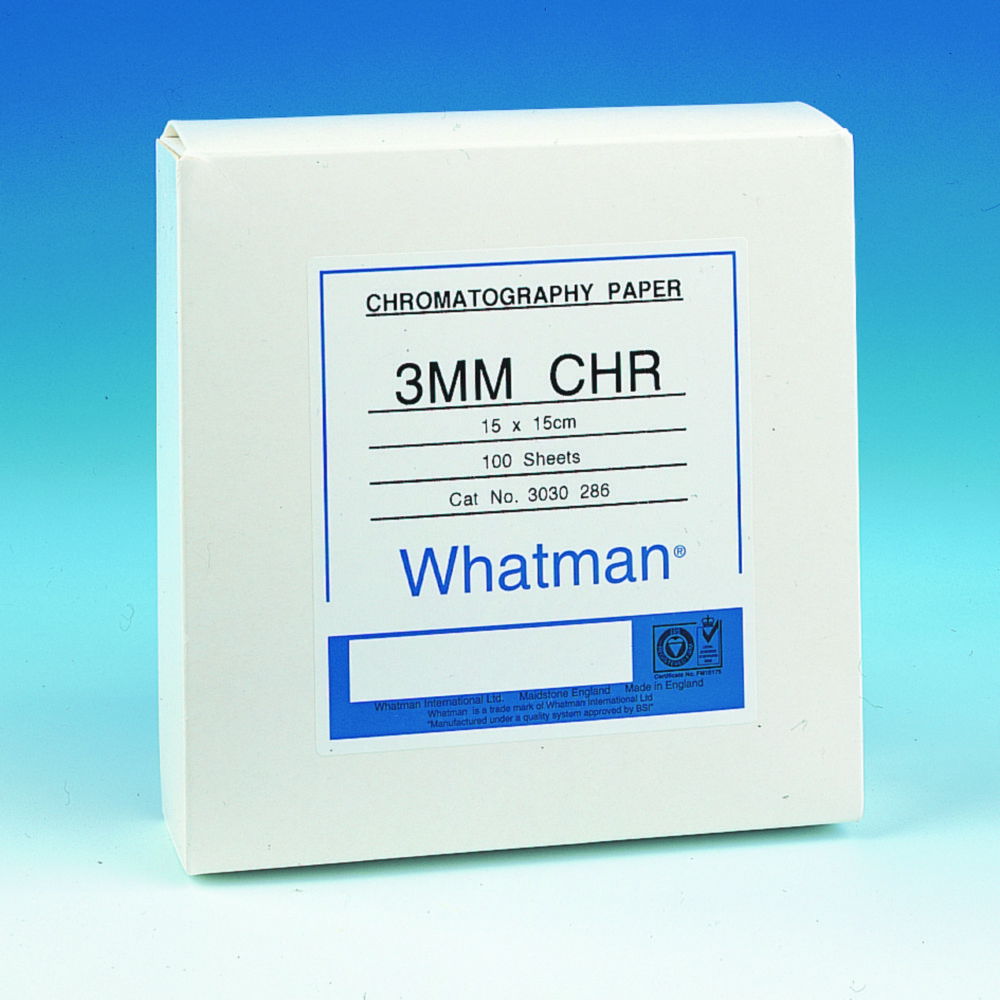
Chromatography paper, reels
Chromatography Paper 1 CHR The standard chromatography paper. Good resolution for general analytical separations. Pure cellulose. Thickness 0.18mm. Capillary rise (water) 130mm / 30 min.Chromatography Paper 3MM CHR Used in electophoresis, in general chemistry and as blotting paper. Pure cellulose. Thickness 0.34mm.Capillary rise (water) 130mm / 30 min.
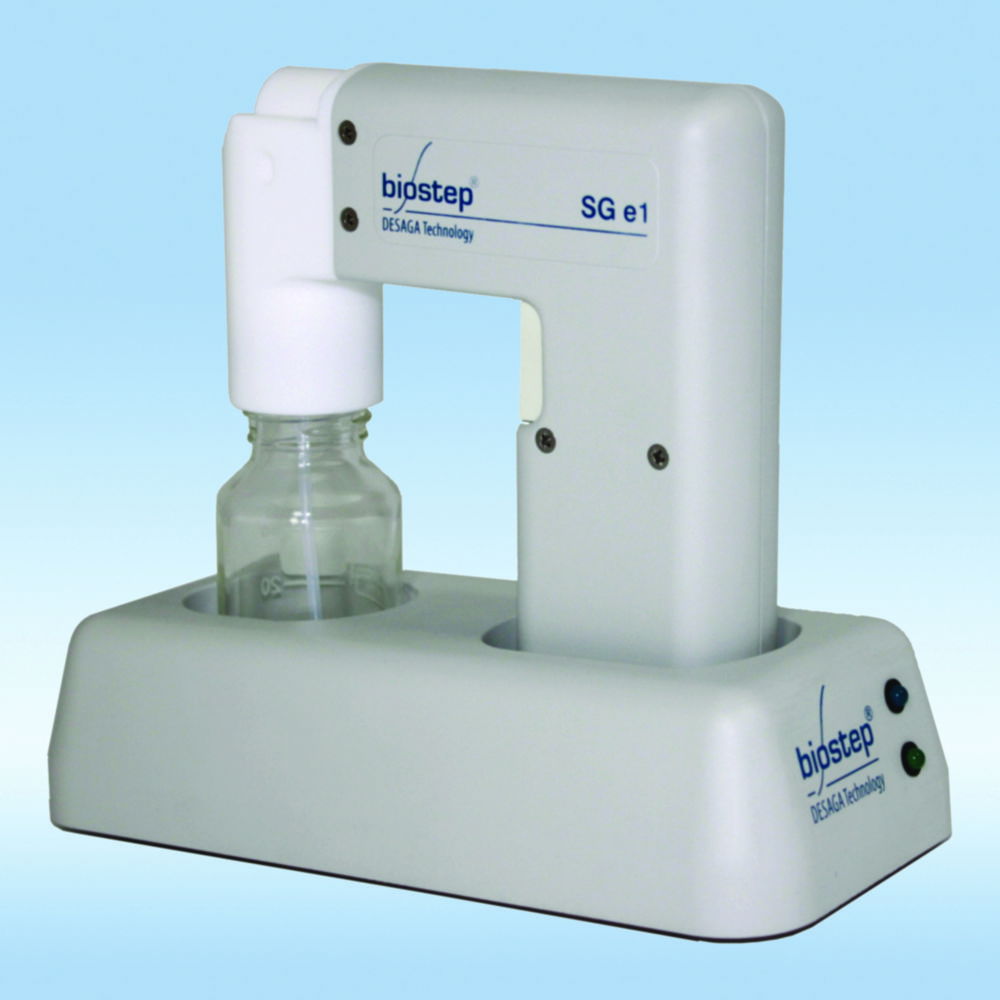
Chromatography sprayer SG e1
Spraying with powerful and quiet pump.The finest spray is produced even when the battery power is low. Liquids, up to the viscosity of light oil, can be finely sprayed at the touch of a button. Particle diameter 5µm to 10µm with a throughput of 20ml/min. based on water. The reservoir bottle for the spray reagent is made of borosilicate glass. The bottle is screwed into the high-grade PTFE nozzle and can be changed in seconds. With quick-charging dock as a storage base. Overload protection enables continuous storage of the sprayer in the charging station. Supplied with battery, battery charger, bottle and nozzle.
Chromatography strips
Divided into 12 bands, each of 15mm wide, for parallel separation of 12 samples.
Cleanroom crimping tools, stainless steel
La-Pha-Pack cleanroom crimping tools are made entirely of stainless steel for maximum durability during dry heat sterilization or autoclaving. The mechanism is corrosion and heat resistant while the stainless steel construction removes the need for any protective coating on the handle or crimp head. Can withstand repeated sterilization for cleanroom use without the risk of damaging the tool. Crimping tools are adjustable in crimping pressure and height to offer optimal crimping results on varying vial styles. Special sizes on request.
Cleanroom decapping tools, stainless steel
La-Pha-Pack cleanroom crimping tools are made entirely of stainless steel for maximum durability during dry heat sterilization or autoclaving. The mechanism is corrosion and heat resistant while the stainless steel construction removes the need for any protective coating on the handle or crimp head. Can withstand repeated sterilization for cleanroom use without the risk of damaging the tool. Crimping tools are adjustable in crimping pressure and height to offer optimal crimping results on varying vial styles. Special sizes on request
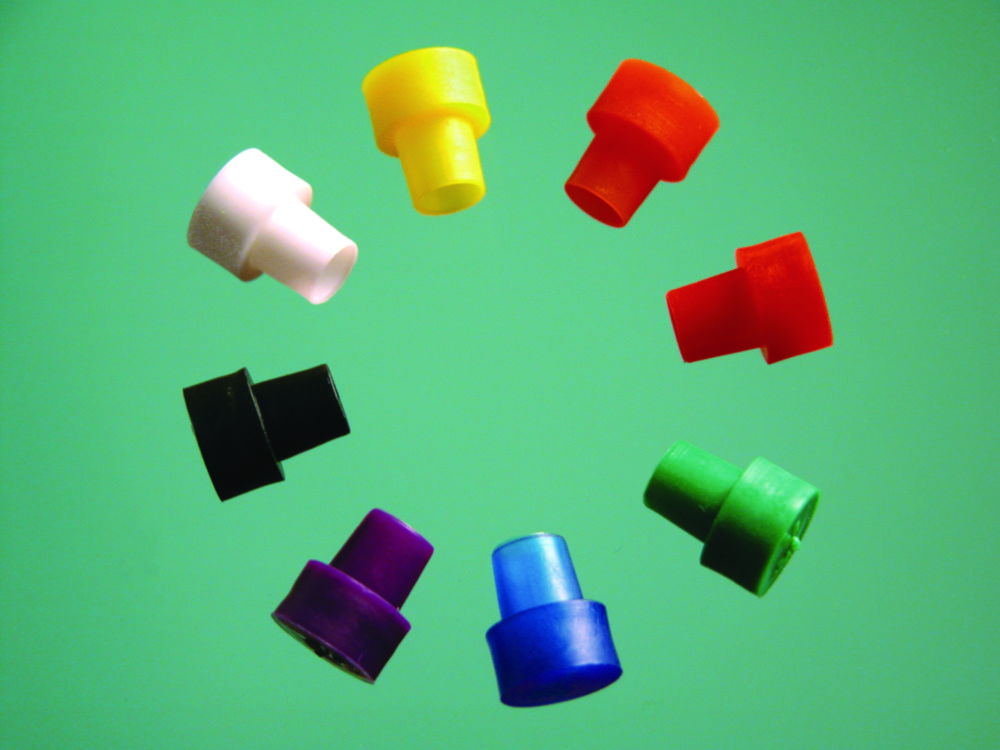
Closing caps for 3 and 5 mm NMR and EPR tubes
The closing caps are made of resilient plastic and are available in two sizes fitting for 3 mm and 5 mm NMR tubes as well as EPR tubes with this respective size. Available in different colours.
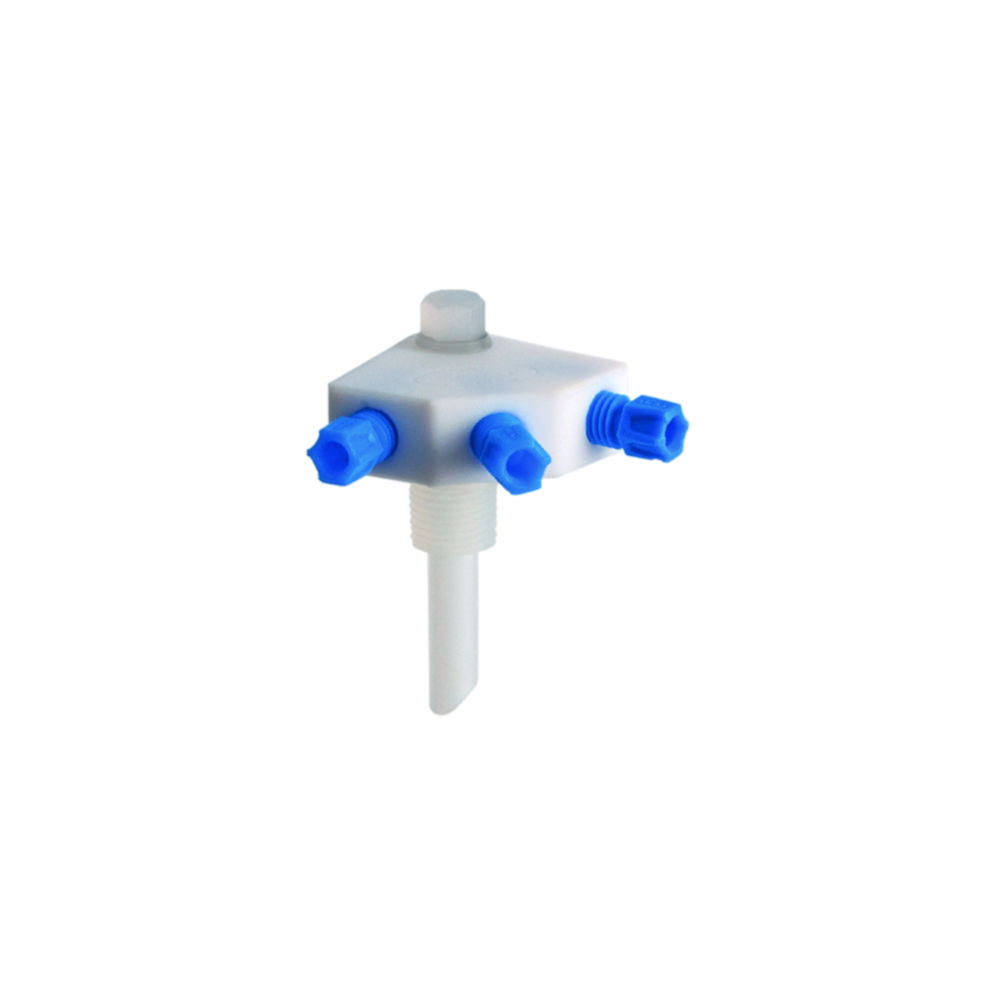
Collectors for tube connector for SafetyWasteCaps
Collectors for additional parts to add more tubings and capillaries. Delivered with fittings.Further configurations available on request.