

Fibre Filters with inorganic binder
Recommended filters for environmental analysis and controlling both air and water pollution.Made of 100 % borosilicate glass fibres with bindersGlass fibre filters capture fine particles down to 1 µm from liquids, in air, gases and aerosols with even 0.3 to 0.5 µm being absorbedExtremely low content in alkali-earth metalsChemical stability: It keeps all its properties in contact with acid solutions (except hydrofluoric acid) and basic solutions at moderate concentrationsStabile at temperatures up to 500 °CGravimetrical analysis of organic and inorganic impurities in water and waste water according to DIN 38409 and EN 872 (suspended particles)Measurement of immission, measurement of dust in air and gases, monitoring of the efficiency of filtration and dedusting, monitoring the combustion air of power plants and of the steel and iron industryMeasurement of dust release in workplace and production processes and the purification of compartment airMeasurement of scintillationFiltration time acc. to Gurley
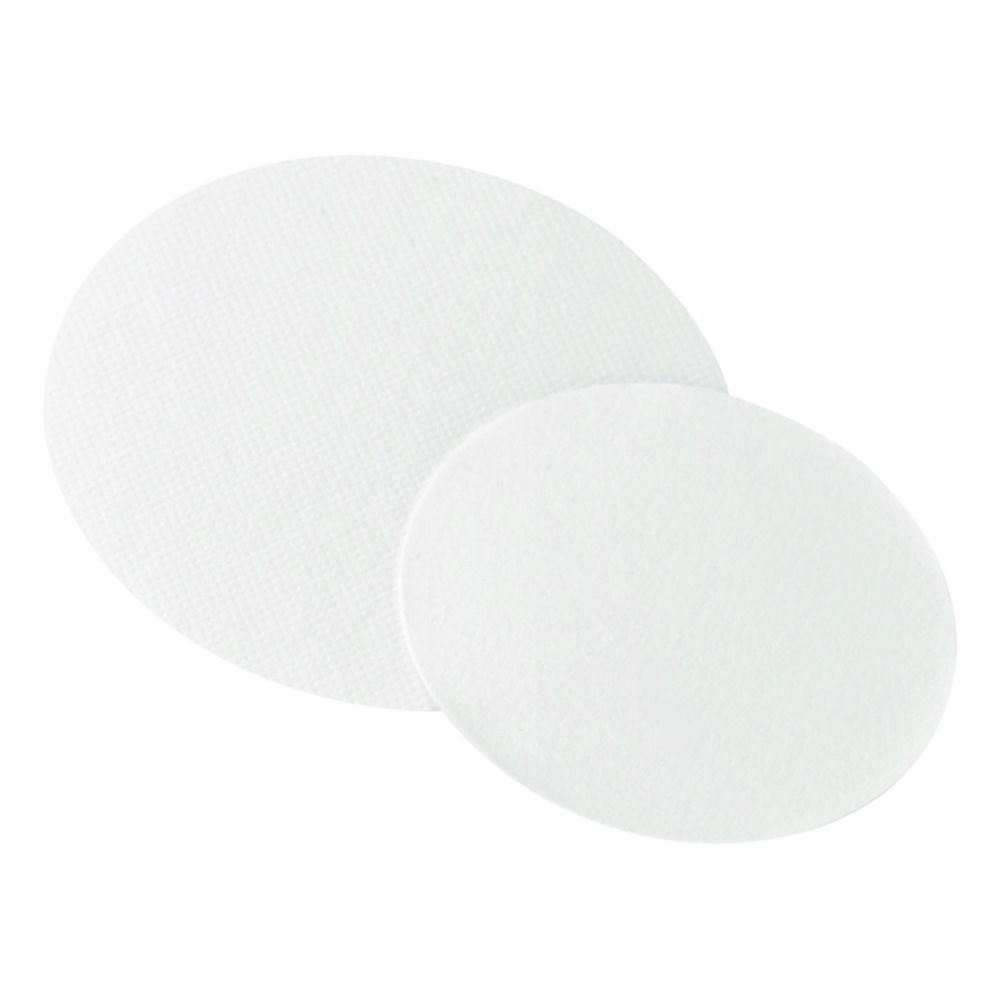
Glass fFbre Papers Type MN 85/90
Can be used up to a maximum of 200 °C. With organic binder.
Glass fiber filters, AP40
White, without binder. The filters can be heated up to 500 °C and retain their structual stability without weight loss. For determining volatile suspended solids in wastewater.HydrophilAutoclavable
Glass fiber filters, APFA
White, without binder. The filters can be heated up to 500 °C and retain their structual stability without weight loss. For monitoring wastewater, collecting suspended particles in gases (e.g. fumes from chimneys) and for biochemical applications.HydrophilAutoclavable
Glass fiber filters, APFF
White, without binder. The filters can be heated up to 500 °C and retain their structual stability without weight loss. For filtering fine precipitates such as protein, nucleic acids and serum precipitates.HydrophilAutoclavable
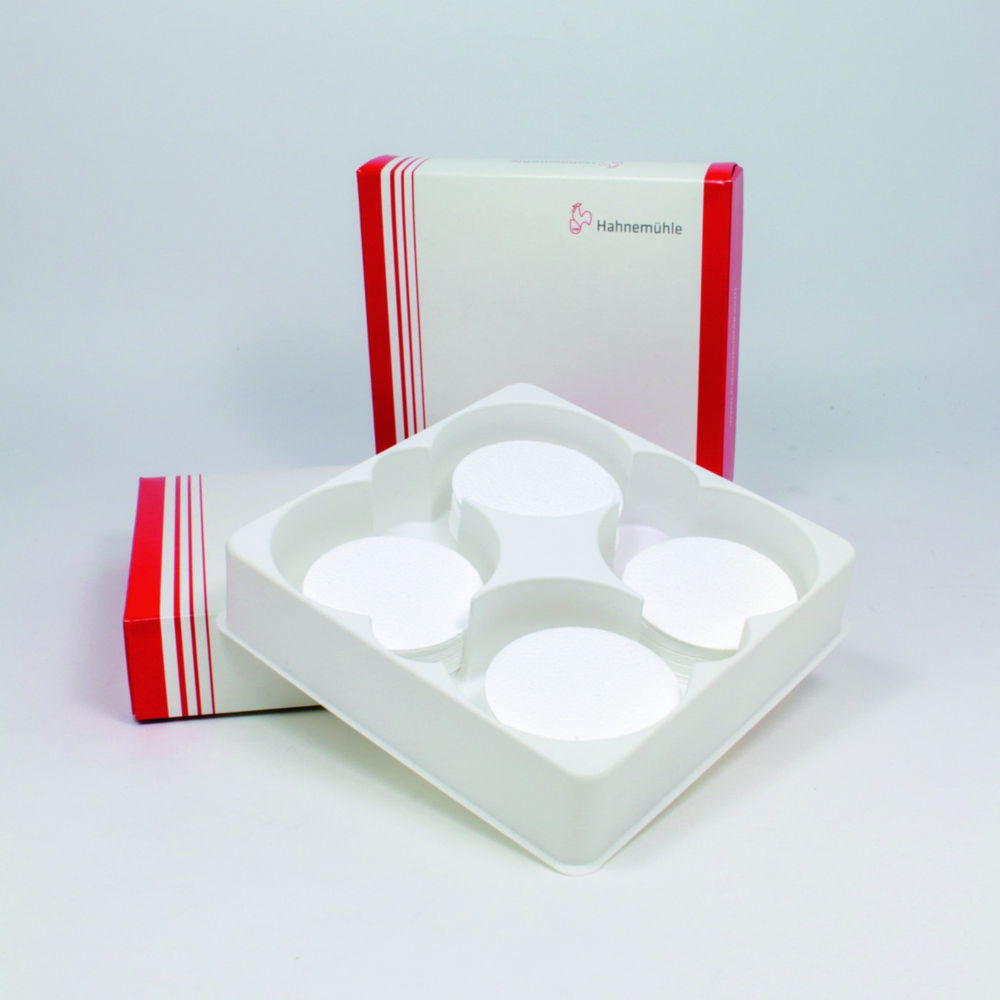
Glass fibre filter GF20 with organic binder
Recommended filter for fast clarification of aqueous solutions and controlling water pollution.Made of 100 % borosilicate glass fibres with organic binderChemical stability: It keeps all its properties in contact with acid solutions (except hydrofluoric acid) and basicsolutions at moderate concentrationsHigh flow speed and high permeability to airStabile up to 180°CSuitable as filter belt measuring instruments and automats for air filtration and analysisFast clarification of aquous solutions and degassing of acidulous solutions
Glass fibre filters GF10 with organic binder
Recommended filters for environmental analysis and controlling both air and water pollution.Made of 100 % borosilicate glass fibres with bindersExtremely low content in alkali-earth metalsChemical stability: It keeps all its properties in contact with acid solutions (except hydrofluoric acid) and basic solutions at moderate concentrationsMeasurement of dust release in workplace and production processes and the purification of compartment airStable up to 180 °C for GF 10High flow speed and high permeability to airSuitable as filter belt measuring instruments and automats for air filtration and analysisSeparation of soot, oil mist and suspended particlesFiltration time acc. to Gurley

Glass fibre filters without binder, round filters
Recommended filters for controlling both air and water pollution.Made of 100 % borosilicate glass fibres without bindersExtremely low content in alkali-earth metalsChemical stability: It keeps all its properties in contact with acid solutions (except hydrofluoric acid) and basic solutions at moderate concentrationsUsable as a pre-filter for membranes to prevent the membranes from silting upDeposition of (radioactive) aerosols and monitoring of nuclear power plantsGravimetrical analysis of organic and inorganic impurities in water and waste water according to DIN 38409 and EN 872 (suspended particles)Measurement of immission, measurement of dust in air and gases, monitoring of the efficiency of filtration and dedusting, monitoring the combustion air of power plants and of the steel and iron industryMeasurement of dust release in workplace and production processes and the purification of compartment airStability at high temperatures: It keeps its properties up to 500 °CHigh flow speed and high permeability to airFiltration time acc. to Gurley
Glass fibre filters without binder, sheets
Recommended filters for controlling both air and water pollution.Made of 100 % borosilicate glass fibres without bindersExtremely low content in alkali-earth metalsChemical stability: It keeps all its properties in contact with acid solutions (except hydrofluoric acid) and basic solutions at moderate concentrationsUsable as a pre-filter for membranes to prevent the membranes from silting upDeposition of (radioactive) aerosols and monitoring of nuclear power plantsGravimetrical analysis of organic and inorganic impurities in water and waste water according to DIN 38409 and EN 872 (suspended particles)Measurement of immission, measurement of dust in air and gases, monitoring of the efficiency of filtration and dedusting, monitoring the combustion air of power plants and of the steel and iron industryMeasurement of dust release in workplace and production processes and the purification of compartment airStability at high temperatures: It keeps its properties up to 500 °CHigh flow speed and high permeability to airFiltration time acc. to Gurley
Glass Fibre Papers MN GF 1
This binder free paper offers fine particle retention, high flow rate and good loading capacity. it is used for high efficiency laboratory filtration as well as air sampling. This filter is stable up to +500 °C.
Glass Fibre Papers Type MN GF 5
Can be used up to a maximum of 500 °C. Without binders.

Glass Microfiber Filters with Binder, Grade GF 10
These glass microfiber filters are made from borosilicate glass and strengthened with an organic binder to provide high mechanical stability.Temperature resistance up to 180 °CMedium filtration speed
Glass Microfiber Filters with Binder, Grade GF 10, rolls
These glass microfiber filters are made from borosilicate glass and strengthened with an organic binder to provide high mechanical stability.Temperature resistance up to 180 °CMedium filtration speedCan be used as a roll filter in automated applications
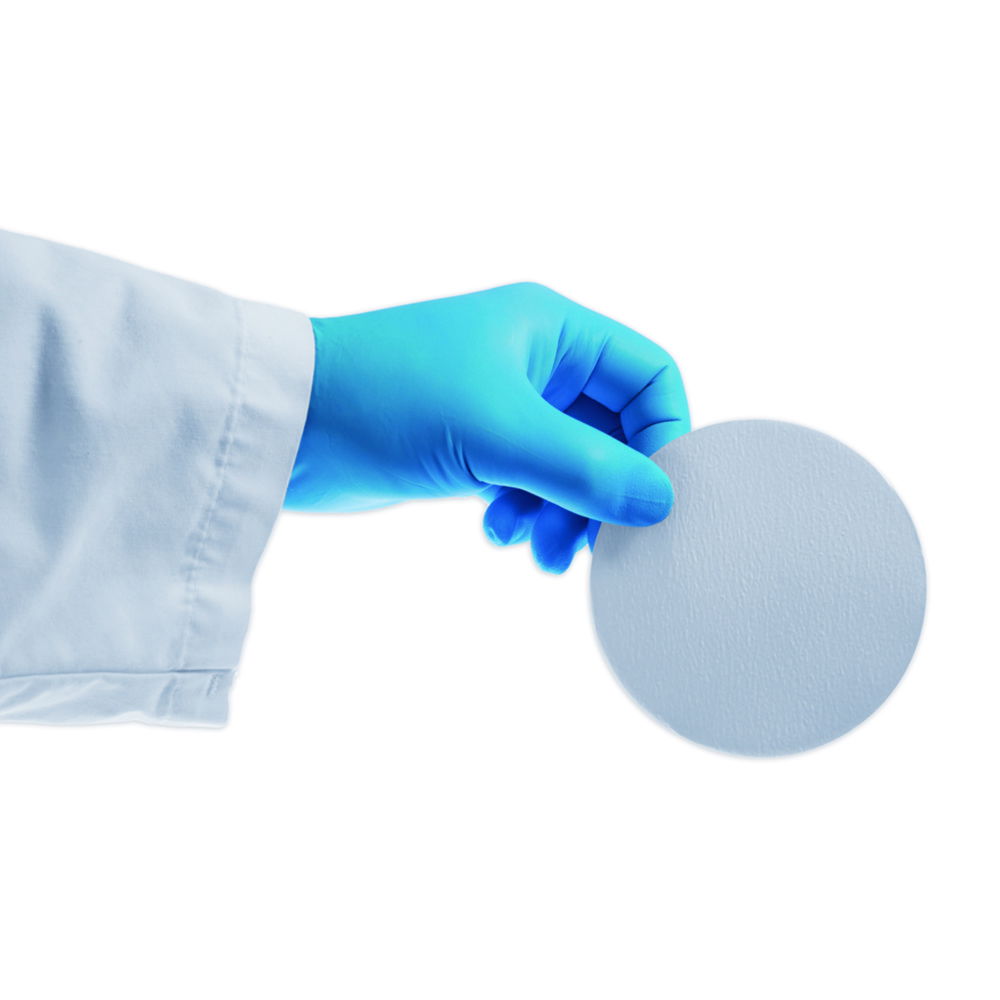
Glass Microfiber with Binder, Grade GF 92
Glass microfibre filters are designed for prefiltration in order to protect against membrane fouling. Grade GF 92 is strengthened with an inorganic binder.Increased strengthTemperature resistant up to 500 °CMedium filtration speed
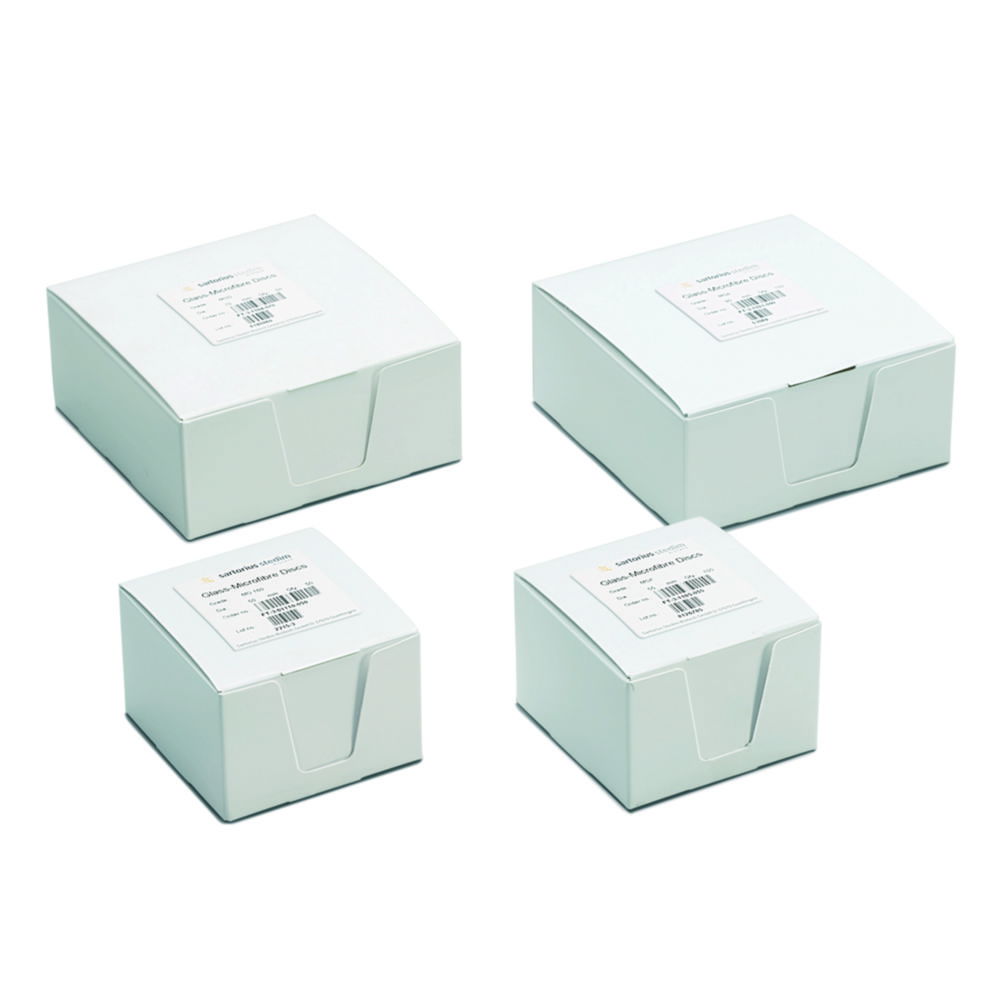
Glass microfibre filters, 1387/1
HydrophilicAir / Gas FiltrationLiquid FiltrationPrefiltrationNon-sterile
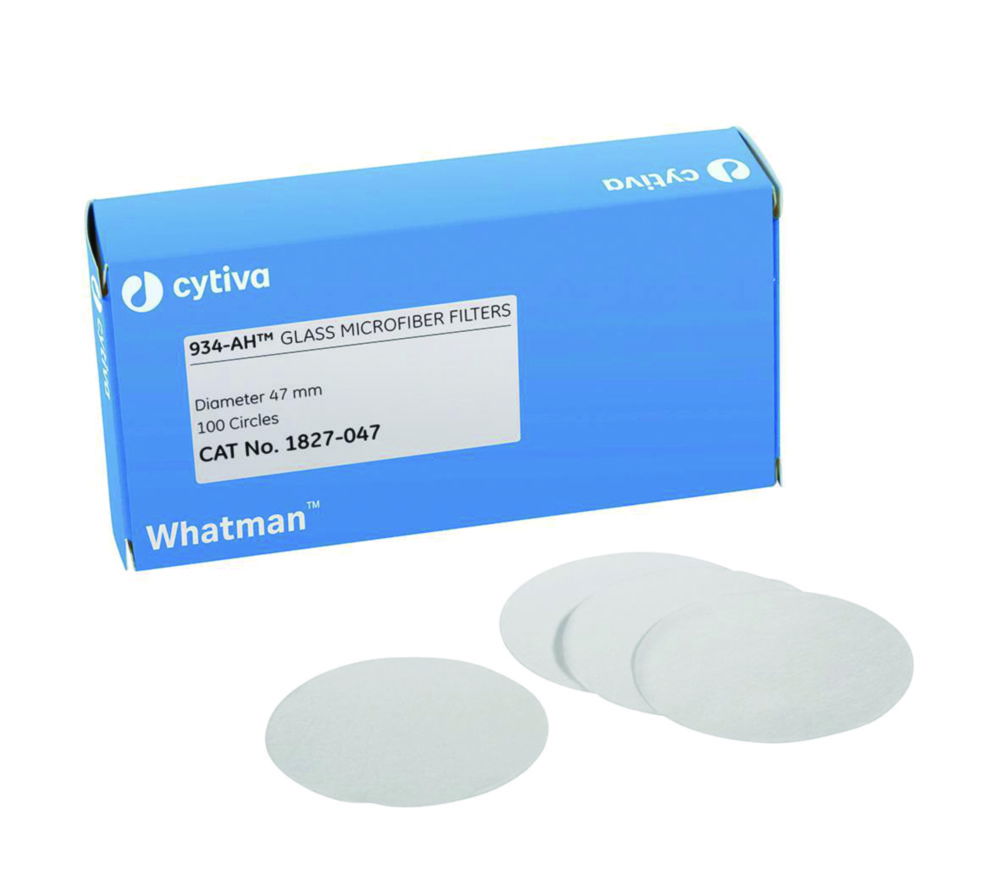
Glass microfibre filters, grade 934-AH
Glass microfibre filters have a fast filtration and a high loading capacity and particle retention rate. Manufactured without chemical binder from high grade borosilicate glass. (Exception: GF6, GF9). They are suitable for gravity or low suction filtration. Filtration speeds generally very much higher than conventional cellulose papers. Efficient retention of micron size particles. Must be used flat. Ideal for use in flat perforated plate Buchner type funnels (not sintered glass models). Can be used up to 500 °C.Circles. High retention at high flow rates. Widely used in water pollution monitoring techniques for suspended solids, and is specified in US Method 934-AH. Particle retention to 1.5µm.
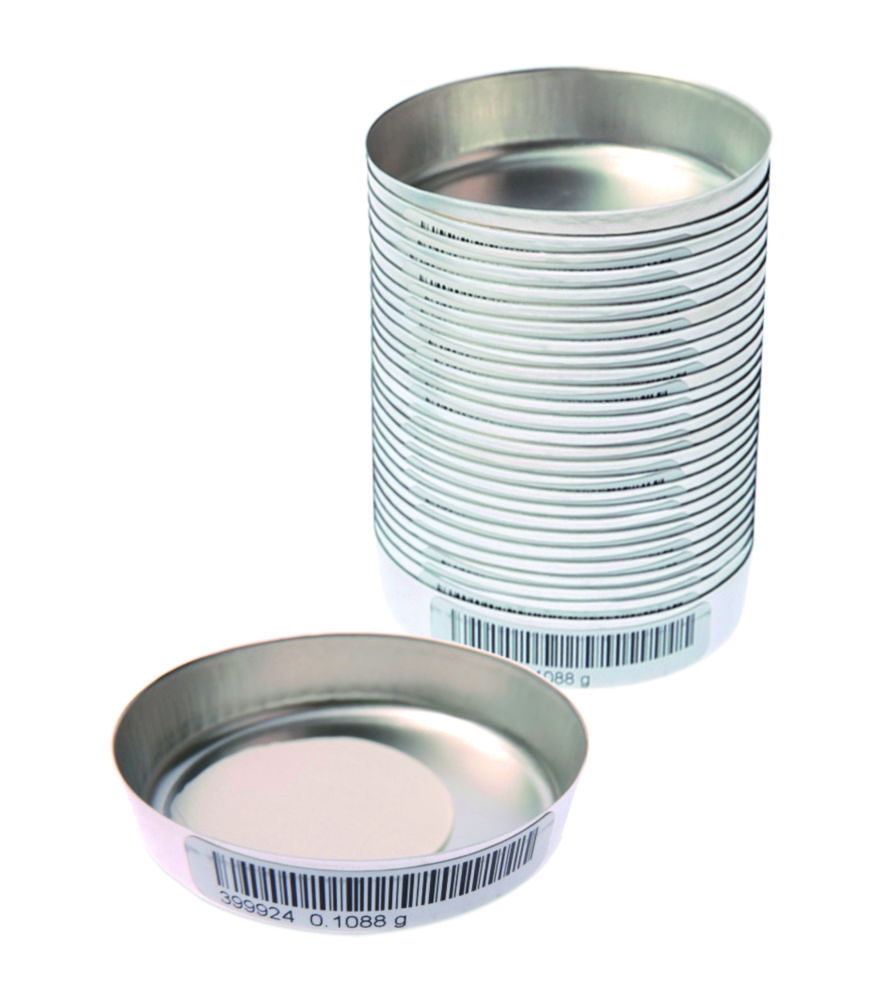
Glass microfibre filters, grade 934-AH RTU, pre-treated, Solids
To be used for solid analysis as well as a wastewater filter for a wide range of water monitorings.Pre-washed, dried or ignited, cooled and weighed Glass Microfibre filters, which eliminate the pre-treating steps that are otherwise required by the US EPA Laboratory Standard Method 2540 parts C, D, and E. These glass microfiber filter papers also have fine particle retention of 1.5 µm at high flow rates to process heavy, turbid samples.Each ready-to-use filter is placed in an individually barcoded aluminum pan that notes the filter weight. Each box contains an additional box ID and barcode that can be used to download the weights of all 100 pans in that box.For suspended and dissolved solids. Pre-washed, dried, cooled, and weighed filters with certified mass loss between washing and drying steps of the lesser of less than 0.5 mg or 4 % in accordance with US EPA Lab Standard Method 2540 parts C and D.
Glass microfibre filters, grade 934-AH RTU, pre-treated, Solids, double weigh
To be used for solid analysis as well as a wastewater filter for a wide range of water monitorings.Pre-washed, dried or ignited, cooled and weighed Glass Microfibre filters, which eliminate the pre-treating steps that are otherwise required by the US EPA Laboratory Standard Method 2540 parts C, D, and E. These glass microfiber filter papers also have fine particle retention of 1.5 µm at high flow rates to process heavy, turbid samples.Each ready-to-use filter is placed in an individually barcoded aluminum pan that notes the filter weight. Each box contains an additional box ID and barcode that can be used to download the weights of all 100 pans in that box.For suspended and dissolved solids. Pre-washed, dried, cooled, and weighed filters with certified mass loss between washing and drying steps of the lesser of less than 0.5 mg or 4% in accordance with US EPA Lab Standard Method 2540 parts C and D.The drying, cooling and weighing steps are repeated twice for highest regulatory concerns.
Glass microfibre filters, grade 934-AH RTU, pre-treated, Volatiles
To be used for solid analysis as well as a wastewater filter for a wide range of water monitorings.Pre-washed, dried or ignited, cooled and weighed Glass Microfibre filters, which eliminate the pre-treating steps that are otherwise required by the US EPA Laboratory Standard Method 2540 parts C, D, and E. These glass microfiber filter papers also have fine particle retention of 1.5 µm at high flow rates to process heavy, turbid samples.Each ready-to-use filter is placed in an individually barcoded aluminum pan that notes the filter weight. Each box contains an additional box ID and barcode that can be used to download the weights of all 100 pans in that box.For volatile substances. Pre-weighed. Aligned to US EPA Laboratory Standard Method 2540 parts C, D, and E.
Glass microfibre filters, grade 934-AH RTU, pre-treated, Volatiles, ignited
To be used for solid analysis as well as a wastewater filter for a wide range of water monitorings.Pre-washed, dried or ignited, cooled and weighed Glass Microfibre filters, which eliminate the pre-treating steps that are otherwise required by the US EPA Laboratory Standard Method 2540 parts C, D, and E. These glass microfiber filter papers also have fine particle retention of 1.5 µm at high flow rates to process heavy, turbid samples.Each ready-to-use filter is placed in an individually barcoded aluminum pan that notes the filter weight. Each box contains an additional box ID and barcode that can be used to download the weights of all 100 pans in that box.For volatile substances. Aligned to US EPA Laboratory Standard Method 2540 parts C, D, and E. Pre-washed and pre-fired at 550 °C.
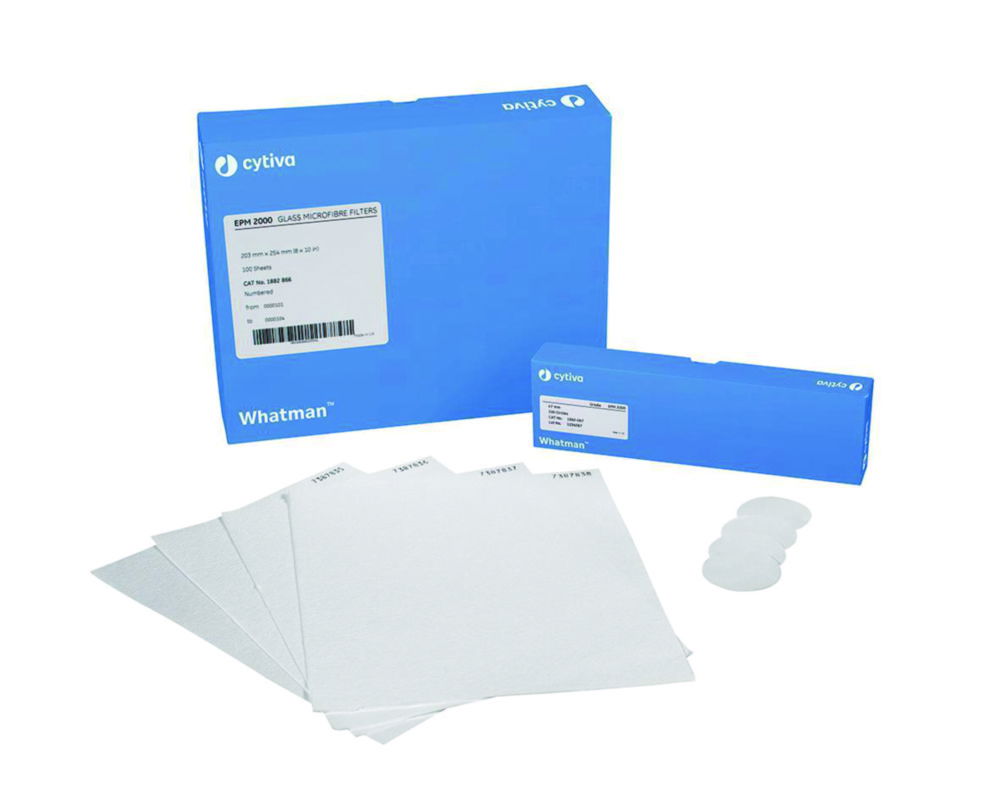
Glass microfibre filters, grade EPM 2000, sheets
Glass microfibre filters have a fast filtration and a high loading capacity and particle retention rate. Manufactured without chemical binder from high grade borosilicate glass. (Exception: GF6, GF9). They are suitable for gravity or low suction filtration. Filtration speeds generally very much higher than conventional cellulose papers. Efficient retention of micron size particles. Must be used flat. Ideal for use in flat perforated plate Buchner type funnels (not sintered glass models). Can be used up to 500 °C.For use in high volume air sampling apparatus. Particle retention to 2 µm.
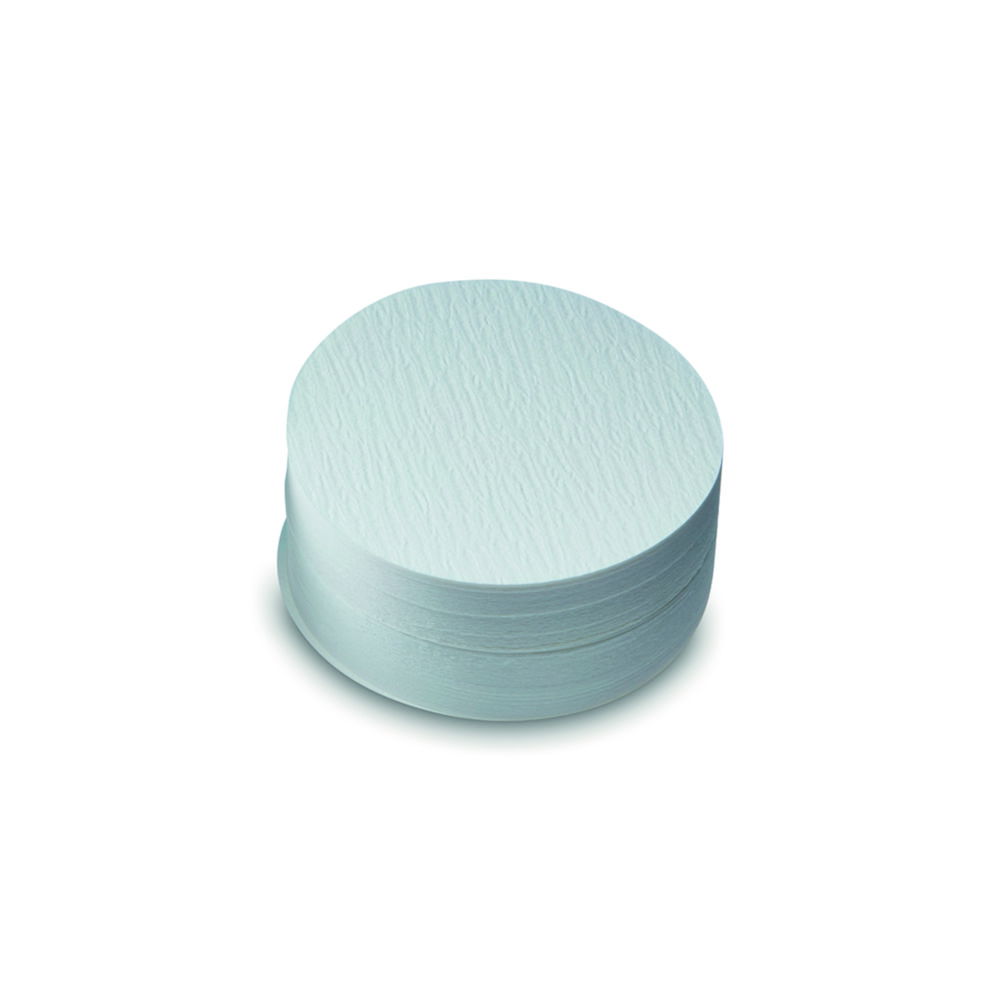
Glass microfibre filters, grade GF 6, circles
Glass microfibre filters have a fast filtration and a high loading capacity and particle retention rate. Manufactured without chemical binder from high grade borosilicate glass. (Exception: GF6, GF9). They are suitable for gravity or low suction filtration. Filtration speeds generally very much higher than conventional cellulose papers. Efficient retention of micron size particles. Must be used flat. Ideal for use in flat perforated plate Buchner type funnels (not sintered glass models). Can be used up to 500 °C.To Herzberg.
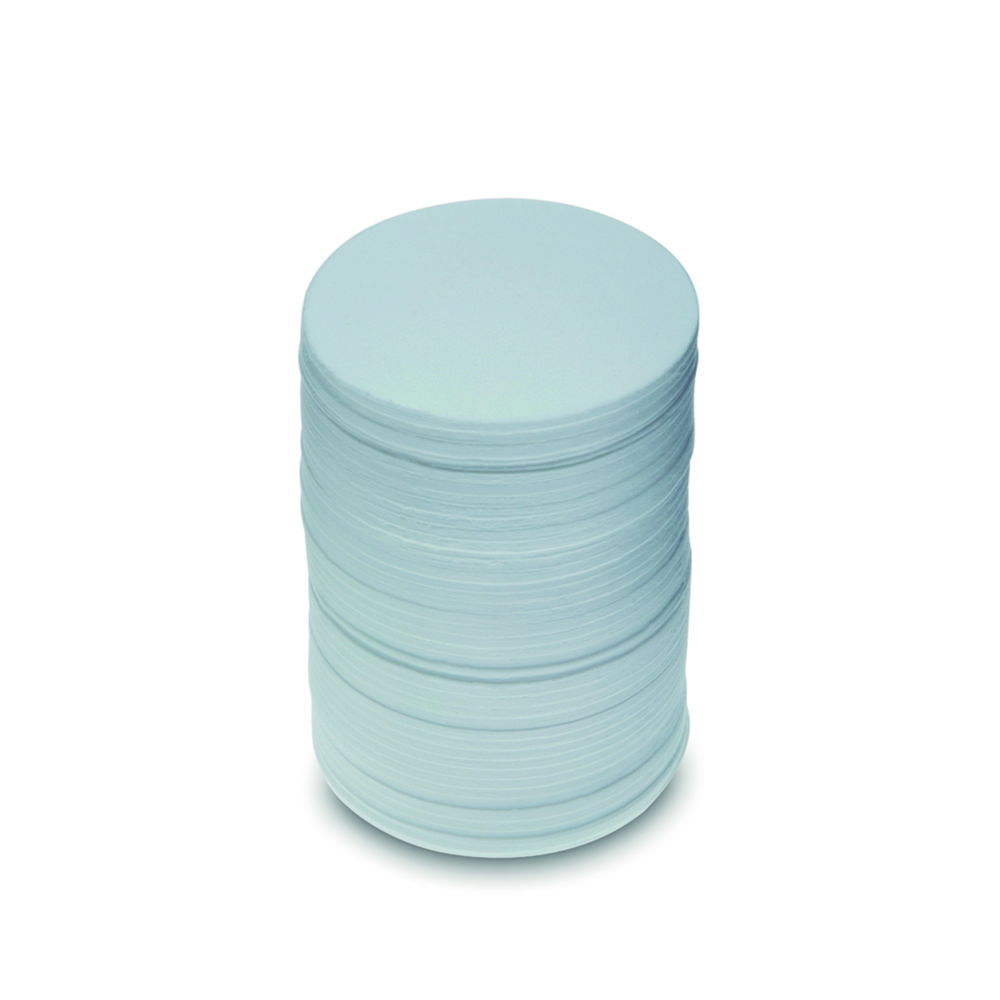
Glass microfibre filters, grade GF 9, circles
Glass microfibre filters have a fast filtration and a high loading capacity and particle retention rate. Manufactured without chemical binder from high grade borosilicate glass. (Exception: GF6, GF9). They are suitable for gravity or low suction filtration. Filtration speeds generally very much higher than conventional cellulose papers. Efficient retention of micron size particles. Must be used flat. Ideal for use in flat perforated plate Buchner type funnels (not sintered glass models). Can be used up to 500 °C.Glass fibre filters are made of 100% borosilicate glass fibres with an inorganic binder. Temperature resistant up to 500 °C. Glass fibre filters are chemically resistant except against hydrofluoric acids and highly concentrated alkalis. Filtration speed to Herzberg.Application:Gas-/air-monitoringWater and waste water determination
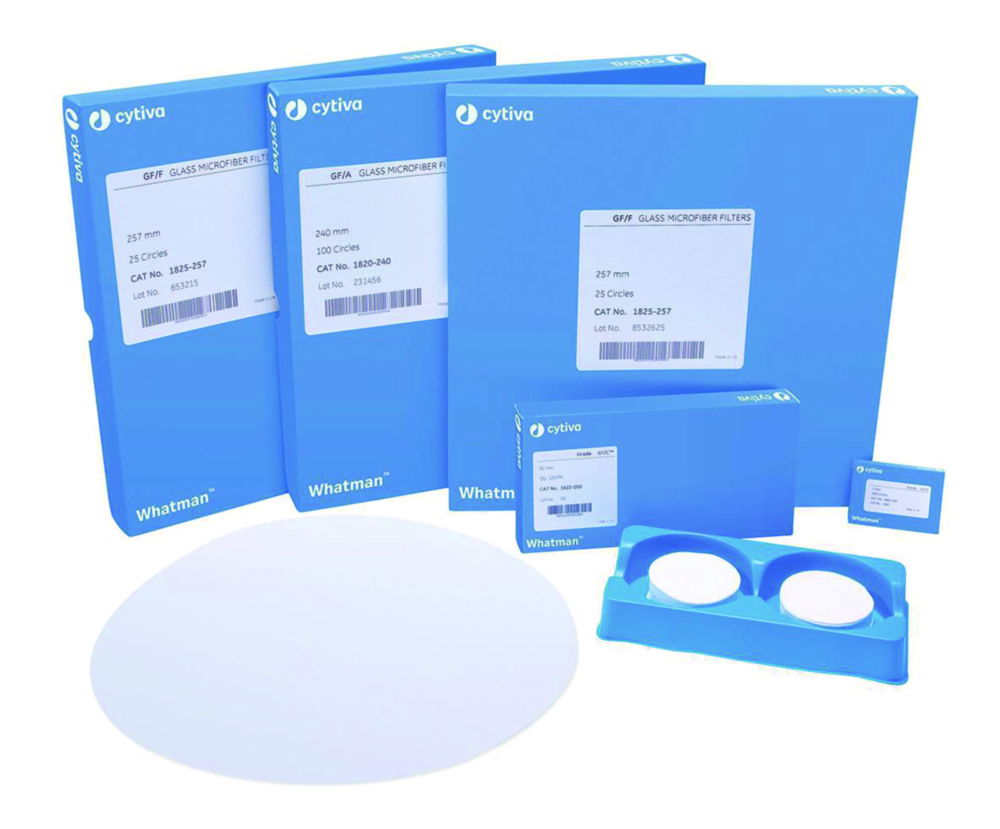
Glass microfibre filters, grade GF/A, round filters
The general purpose high efficiency glass microfibre filter. Particle retention to 1.6 µm.
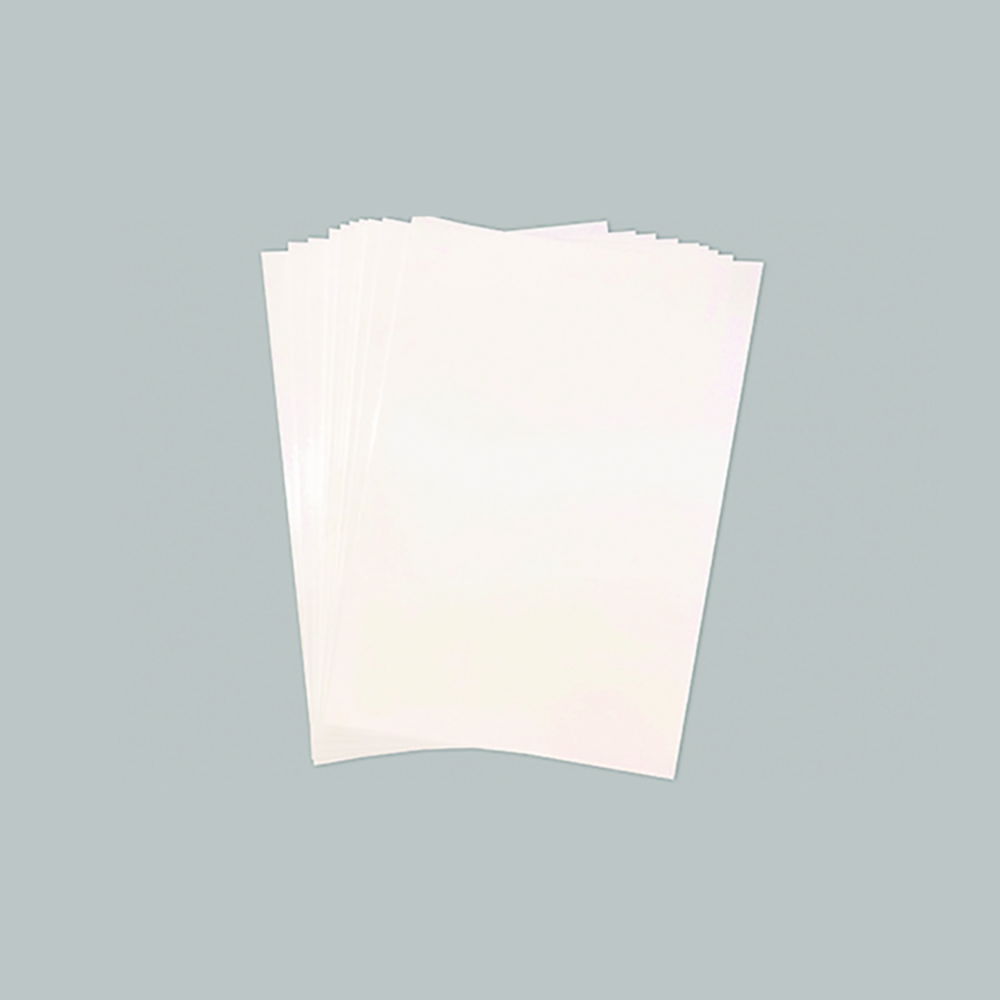
Glass microfibre filters, grade GF/A, sheets
The general purpose high efficiency glass microfibre filter. Particle retention to 1.6 µm.
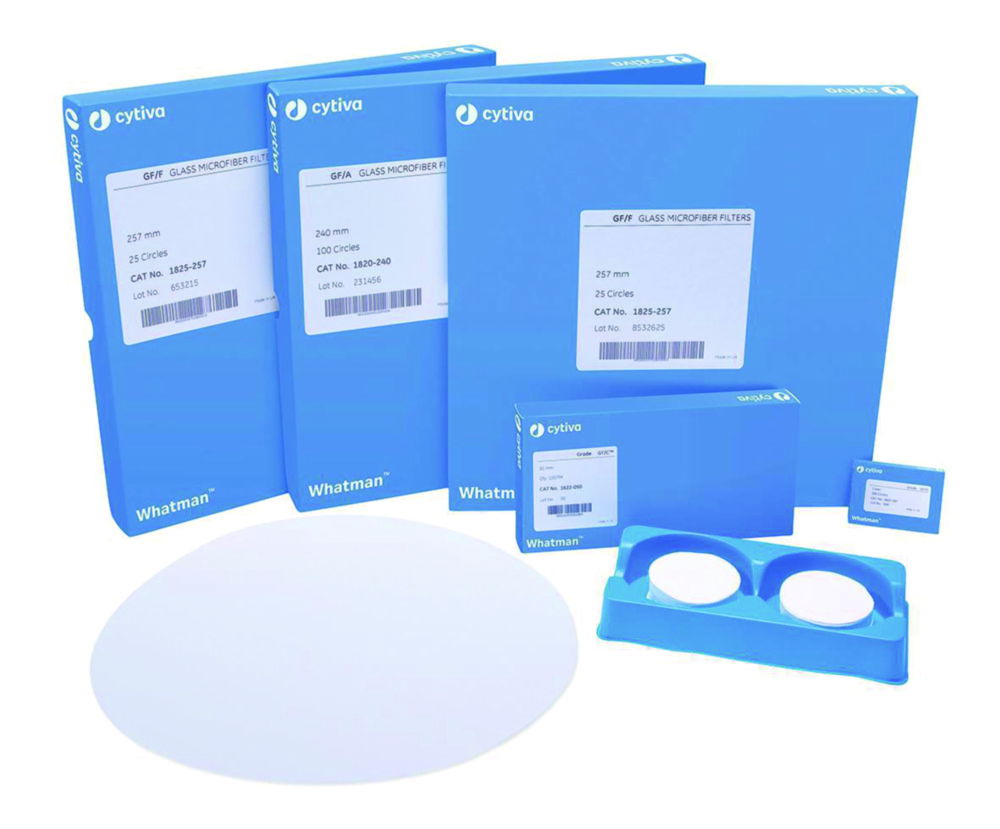
Glass microfibre filters, grade GF/B, round filters
Glass microfibre filters have a fast filtration and a high loading capacity and particle retention rate. Manufactured without chemical binder from high grade borosilicate glass. (Exception: GF6, GF9). They are suitable for gravity or low suction filtration. Filtration speeds generally very much higher than conventional cellulose papers. Efficient retention of micron size particles. Must be used flat. Ideal for use in flat perforated plate Buchner type funnels (not sintered glass models). Can be used up to 500 °C.Three times thicker and with greater wet strength than GF/A. Particle retention to 1µm.